Eugene Bell Center for Regenerative Biology and Tissue Engineering
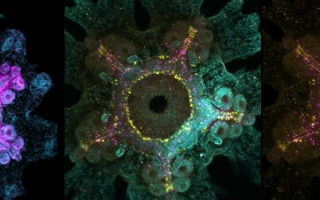
The ability of many animals to spontaneously regenerate their body parts has intrigued scientific observers for centuries. Although humans share the same basic genes and pathways, we have somehow lost these regenerative capacities, which leads to significant health costs. An understanding of tissue and organ regeneration in lower animals holds great promise for translating to medical treatments for serious human conditions, including spinal cord injury, diabetes, organ failure, and degenerative neural diseases such as Alzheimer’s.
The MBL is uniquely positioned to move this biomedical research goal forward in the new Eugene Bell Center for Regenerative Biology and Tissue Engineering. The Bell Center was made possible by transformative leadership gifts, including $8 million from Millicent Bell, and $5 million from John W. and Valerie Rowe. It is a key element of the Catalyst Campaign to raise $125M in support for research and education at the MBL.
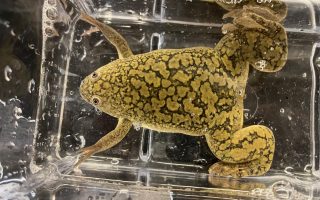
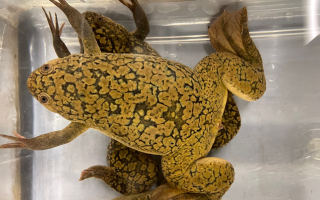
MBL researchers have studied regeneration in marine and other animals for more than a century, building expertise that will flourish and grow in the Bell Center. A cornerstone of the Bell Center is a new, national resource for research on the frog, Xenopus, which possesses unique regenerative abilities and is a major animal model used in U.S. biomedical research. The National Xenopus Resource at the MBL is funded by the National Institutes of Health.
The Bell Center is also part of the Brown University/Marine Biological Laboratory Parnership, which includes a joint Graduate Program in Biological and Environmental Sciences. Faculty in the Bell Center may receive a joint appointment at Brown through the Brown-MBL Partnership, and may also receive a joint appointment at the Harvard University Department of Stem Cell and Regenerative Biology.