In Cape Cod’s Depleted Estuaries, Shellfish Help Reverse Pollution | Civil Eats
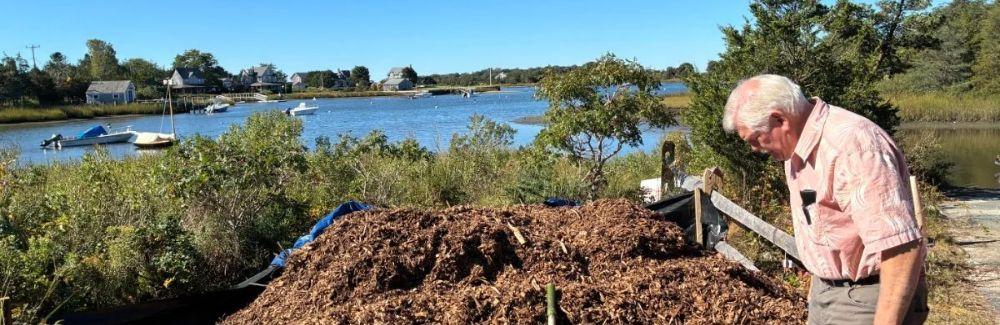
Editor’s note: This article discusses permeable reactive barriers that have been installed under the guidance of MBL research scholar Ken Foreman to intercept polluted groundwater and denitrify it.
Timmy Souza is fresh off the overnight shift at a substance abuse treatment center when he pulls on his waders to go fishing for quahogs, a hard-shelled clam. It’s a sunny October morning in Falmouth, Massachusetts. He grabs a rake and a basket, steps out into Bourne’s Pond, and begins scraping the silty bottom.
The rake’s metal tines produce a high-pitched ting when they collide with a rock. When he hits the quahogs, their hard shells find a lower register: tunk. It’s a friendly, familiar sound for Souza. He calls his cats Tunka Tunka in tribute.
Souza, 65, began harvesting shellfish as a kid, when blue crabs, oysters, soft-shell clams, and quahogs were plentiful. Scallops then were so abundant in the eelgrass meadows that they took longer to shuck than to gather. As an adult, Falmouth’s estuaries offered Souza a lifeline in a community with limited ways to make ends meet.
Filling a basket with shellfish is much harder than it used to be.
Read more of the article here.
Source: In Cape Cod’s Depleted Estuaries, Shellfish Help Reverse Pollution | Civil Eats