How Do Animals Know the Timing of Tides? One Tiny Crustacean is Helping Scientists Find Out
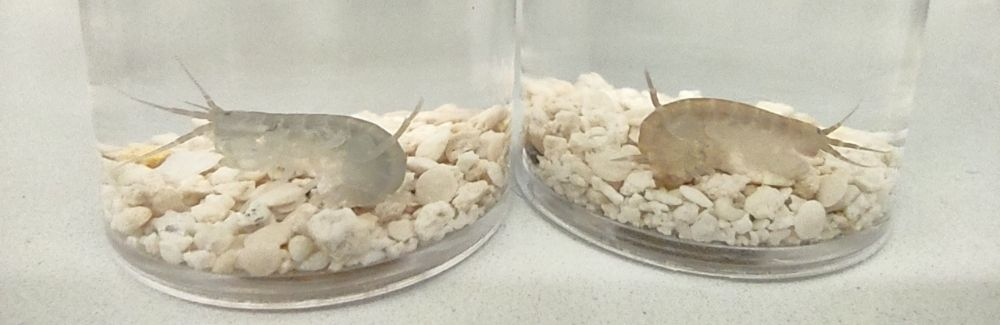
A tiny crustacean, Parhyale hawaiensis, thrives along the seacoast amidst the changing tides. Yet until recently, no one knew the genes underpinning how these small shrimp-like creatures know the timing of the tides.
Like most animals, P. hawaiensis has an internal circadian clock set to the rhythm of 24-hour days and synchronized with light and dark cycles. A surprising discovery by scientists at UMass Chan Medical School and the Marine Biological Laboratory has identified that the four core building block genes of the circadian clock are also key for the circatidal clock in P. hawaiensis, helping the small critters time their behavior with the 12.4-hour cycle of tides.
Previous work by collaborators Patrick Emery, a professor of neurobiology at UMass Chan Medical School and Joshua Rosenthal, a senior scientist at the Marine Biological Laboratory, demonstrated that the gene Bmal1 was required for both circadian and circatidal behavioral rhythms in P. hawaiensis.
This work developed out of Emery’s time at the MBL as a Whitman Fellow, when Rosenthal suggested he try working with P. hawaiensis to answer his research questions about how marine life knows the timing of the tides.
“The MBL's role in this work was to provide an opportunity through the new marine model organism initiative to allow scientists to use a marine model to answer research questions that were essentially intractable before,” Rosenthal says.
In their most recent publication in Current Biology, Emery and Rosenthal have identified three more core clock genes — Cry2, Per, and Clk — that are necessary for both the circadian and circatidal clocks in P. hawaiensis. Each of these genes is expressed in the neurons that make up the internal clocks, and these clock neurons regulate the metabolism and behavior of P. hawaiensis by keeping time from environmental cues.
Victoria Louis, a postdoctoral researcher in Emery’s lab is the lead author on the paper and drove the work, closely collaborating with Zachary Bellido, a research assistant in the Rosenthal Lab who generated the gene knockouts needed for the study.
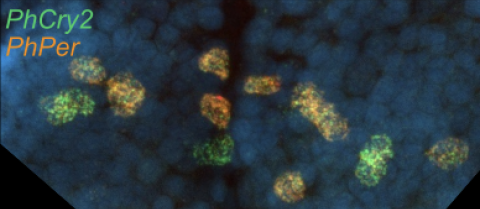
The discovery that circadian and circatidal clocks share the same four core genes was a significant one. But sharing genes raised an immediate puzzle: if the same molecular machinery builds both clocks, how does the animal keep the two rhythms separate?
Part of it is location, as clock neurons responsible for circadian rhythms and circatidal rhythms are found in different areas of the brain. However, Emery and Rosenthal were able to show that core clock genes are also wired differently at the transcriptional level in circadian and circatidal neurons.
This time-keeping flexibility struck Emery as one of the more remarkable aspects of their discovery. “The genes building the clocks seem to be quite plastic because they can generate rhythms of 12.4 hours to 24 hours, adjusting their mechanism to allow different periodicities,” explains Emery, and finding this “plasticity is interesting, as it informs our understanding of biological clock mechanisms, and could help us, at some point, adjust our circadian system if we need to for one reason or the other.”
Their findings open up new questions the team plans to pursue next. Louis wants to understand how the shared genes interact with each other, and whether other circadian clock genes turn out to be part of the circatidal clock too. Emery is interested in clarifying how these genes are modulated to produce a 12.4-hour rhythm in one set of neurons and a 24-hour rhythm in other, and Rosenthal is curious about the neuronal pathways providing the cues to circatidal neurons.