How Sensory Neurons Help the Brain Pursue its Goals
A study recently published on how sensory neurons help the brain pursue its goals has its roots in the Marine Biological Laboratory’s (MBL) Neural Systems and Behavior course, where the research first began. One of the course’s students, Ernesto Cabezas-Bou, then pursuing his PhD in Puerto Rico, received an MBL fellowship to do research in Daniel Colón-Ramos’ lab. When Hurricane Maria devastated Cabezas-Bou's laboratory in Puerto Rico, he joined Colón-Ramos’ lab to continue his doctoral work. The resulting paper is the culmination of his research.
A new Yale study offers insight into a fundamental question in neuroscience: How does the nervous system transform sensory information into signals that help us achieve our goals?
It turns out that sensory neurons — specialized nerve cells that transmit environmental information gleaned through the five senses to the brain — may play a more complex role than previously believed.
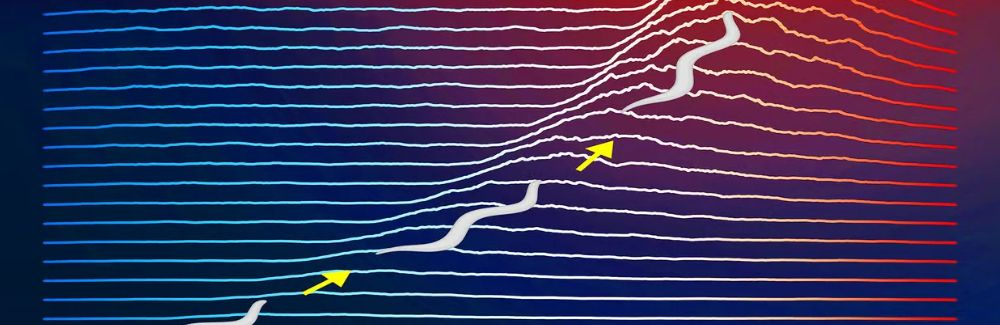
For the study, the research team trained roundworms to prefer certain temperature conditions using food rewards. They constructed a gradient in which there were different temperatures in given spots; after placing the worms on the gradient, researchers found that the animals inched toward the temperature they’d learned to prefer.
The findings are published in the journal Current Biology.
“They remember the temperature at which they were under favorable conditions happily eating, and they go back to that temperature,” said study’s lead author Daniel Colón-Ramos, the Dorys McConnell Duberg Professor of Neuroscience and Cell Biology at Yale School of Medicine.
But deep inside the worm’s nervous system, something unexpected was taking place. Temperature- sensing neurons are known to respond to temperature changes, but not all temperature changes are represented the same way by the worm’s sensory neurons. The sensory neurons sensed changes in temperature throughout the gradient, the researchers found, but turned up their responses when the worm was near the temperature it had learned to prefer and switched the response down when the worm was off course.
The findings may offer a broader lesson about the brain and how it achieves goals. Sensory neurons throughout the animal kingdom detect changes in light, sound, chemicals, and other environmental features. But how an animal navigates depends not only on the stimulus itself, but also on the animal’s prior experience and what it is trying to accomplish.
“Our study shows how a sensory neuron combines information about changes in the environment with information from a learned goal,” said co-first author Malcom Díaz García, a Ph.D. student at Vanderbilt University who was previously part of Colón-Ramos’ Yale lab. “It starts in the way the sensory cell itself represents the experience. The sensory cell is capable of sophisticated computation to represent the environment differently based on a learned goal. This offers a framework for understanding how experience can shape what the nervous system emphasizes and transforms into behavior.”
The study may also help in the understanding of conditions that affect focus and sensory information — such as attention-deficit/hyperactivity disorder.
“From a molecular perspective, many of our sensory cells are, number one, sensing changes, and number two, using very similar mechanisms to the ones that the sensory cells in the worm are using,” said Sandeep Kumar, a postdoctoral associate at Yale School of Medicine and co-first author of the study. “We have maybe been underestimating how sensory systems are actually plastically representing things based on goals.”
Because sensory cells function as the interface between the brain and the world — extracting information that is interpreted by the rest of the nervous system — understanding how they function is critical to understanding how information is processed and then acted upon, the researchers said.
For the study, the research team used the tiny roundworm, Caenorhabditis elegans, because it has a well-characterized nervous system and is transparent, which enabled them to simultaneously track what the animal was experiencing, its behavior, and how its neurons responded to changes. After placing the animals on the temperature gradient, the researchers tracked their response, focusing on a temperature-sensing neuron known as AFD (Amphid Finger-like Endings) neurons; they monitored the worms’ movement while simultaneously measuring activity in the AFD using a new experimental setup that enabled them, with AI-assisted methods, to record neural activity and behavior.
The researchers then developed a form of what is known as “thermal virtual reality”: they recorded the sequences of temperature changes experienced by individual worms as they navigated the gradient towards their preferred temperature and then replayed those sequences to worms that weren’t allowed to wander the gradient. This recreated the thermal experience of a navigating worm without the animal actually moving, allowing the researchers to precisely control and manipulate its sensory inputs. By replaying the same thermal experience for worms with different learned temperature preferences, the researchers could examine how memory shapes the way a sensory neuron responds to the same physical environment.
Finally, using mathematical models and behavioral simulations the researchers tested whether changes in neuron sensitivity could explain the patterns they observed; they found that the strength of a neuron’s reaction to a given temperature change hinged on the worm’s learned temperature preference.
Other authors of the paper included postdoctoral associates in the Department of Neuroscience and Department of Cell Biology. Collaborators from Yale’s Wu Tsai Institute, the Howard Hughes Medical Institute’s Janelia Research Campus, and the University of Connecticut Health Center also took part.