The MBL Celebrates 75 Years Since Rachel Carson’s The Sea Around Us
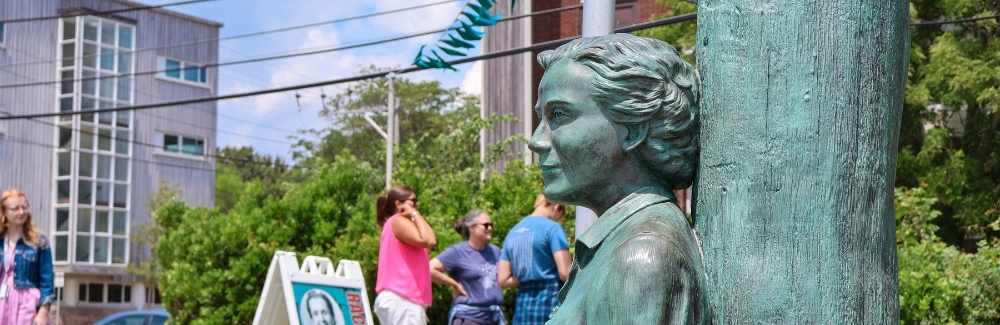
“The sea has always challenged the minds and imagination of men and even today it remains the last great frontier of Earth.” – Rachel Carson, The Sea Around Us (1951)
On June 10, Woods Hole had a sweet time celebrating the 75th anniversary of Rachel Carson’s book, The Sea Around Us. At Waterfront Park, the MBL welcomed the community for a refreshing ice cream social and to learn more about Rachel Carson, her work, and her time at the MBL.
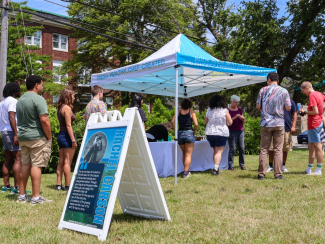
The event aligned with that night’s Friday Evening Lecture by Virginia Tech history professor Mark Barrow, which examined the “noisy response” to Carson’s ground-breaking Silent Spring (1962). The book’s investigation of the insecticide DDT remains a pillar of the American environmental movement today, and is what Carson is most remembered for. Barrow also attended the social to answer the community’s questions.
Carson, an iconic biologist and writer, published the Woods-Hole-inspired The Sea Around Us in 1951. The initial bestseller explored our world’s oceans as not only a scientific wonder, but a poetic one as well. According to Barrow, The Sea Around Us was the book that “brought her to fame,” winning her the National Book Award.
Carson reportedly fell in love with the sea in 1929 during her six-week course at the MBL. Over the following decades, she would return to Woods Hole and the MBL several times, both as a researcher and writer. “It was [in Woods Hole] that she got a sense of the ocean’s wonder and beauty, and the complicated relationships that exist in it,” said Barrow. “And she started writing about it in a very compelling way.”
In fact, Barrow believes it was Carson’s “unique ability to communicate” that built her enduring legacy. “She wrote about complex things in ways that made them understandable to people—in ways that made people care.”
75 years after Carson’s love letter to the sea, the MBL still strives to carry on her legacy of curiosity and affection for the natural world.