The Road to Better Health Requires a Map of the Microbes in Your Mouth
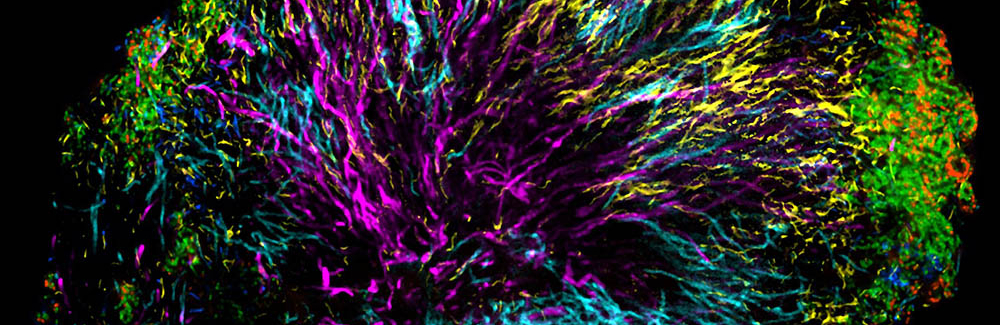
There's a lot of buzz about the gut microbiome—the trillions of microbes that help us digest food and support the immune system. But your mouth is also home to its own highly specialized microbial community, and new research suggests that these oral microbes may play an equally important role in maintaining health.
Not only are they important, but “different parts of your mouth have entirely different bacterial communities,” explains Jessica Mark Welch, a microbiology professor at the ADA Forsyth Institute and adjunct at the Marine Biological Laboratory (MBL). “There are totally different bacteria living on your tongue compared to on your teeth,” and “there are bacteria that only live on the roof of the mouth, and those that live only on the gums.”
Mark Welch believes mapping these microbial niches will provide a census of the good bacteria present in the mouth and help researchers develop targeted therapies, such as probiotics, to maintain oral health and prevent disease. Her goal is to increase our knowledge “of how these bacterial communities work together on the tongue and the teeth, and to understand them well enough to be able to manipulate them when they go bad.” Mark Welch’s map may not only help guide future therapies but also shed light on a fundamental ecological question: how microbiome niches develop and are maintained. “From an ecology standpoint, because these bacteria are falling off the surfaces inside the mouth into saliva, they're all swishing around, and there is no barrier to dispersal from one site to another,” she explains. Yet despite this constant mixing, bacterial species persist in living in specific regions of the mouth.
Many of us brush and floss because we know too much buildup of bacteria can lead to inflammation and gum disease, but even regular oral hygiene does not permanently disrupt the microbial map Mark Welch has uncovered. As an evolutionary biologist, she is intrigued at how “the bacteria are dealing with the same immune system, the same diet, the same everything else, and yet they occupy these very distinct habitats within the mouth.”
She hopes that a better understanding of the mouth's microbial ecology will eventually lead to more targeted therapies. Right now, if the bacterial community in the mouth is “going off in some bad direction,” the primary option is to use antibiotics “just to knock it all down, and that's usually not very effective long term,” she says. Instead, researchers would like to be able to steer the microbial community back toward a healthier state—perhaps by changing the diet or introducing beneficial bacteria and mapping the ecology of the mouth is a crucial first step.
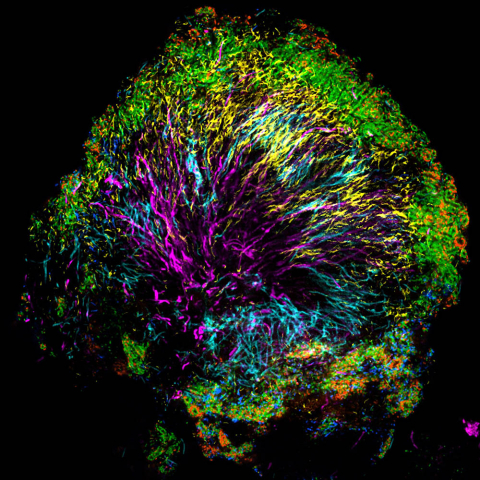
The key to creating her map of the mouth was developed at the Josephine Bay Paul Center at the MBL. A microscopic image of dental plaque taken by the Mark Welch lab showed a filamentous ecosystem of bacteria, a finding that provided the first glimpse of the microbial landscape she has spent years charting, identifying the bacteria that inhabit it and mapping their locations throughout the mouth.
“Corynebacteria are like trees in the forest. They create a spatial structure that other organisms then inhabit,” says Mark Welch. Living primarily on the teeth, these branching bacteria form the framework of a microbial ecosystem. Their structure creates a variety of microhabitats—some rich in oxygen, others nearly devoid of it—that support different bacterial communities.
One such type of bacteria is Capnocytophaga which uses the carbon dioxide secreted by its bacterial neighbors, streptococci, within the branches of the microscopic plaque structure. After corynebacteria, Capnocytophaga are the most plaque-specific bacteria known. But Mark Welch is quick to point out that just because Capnocytophaga is found in plaque, it doesn’t mean it is harmful. Instead, it is likely a vital part of the healthy microbial community of the human mouth. “We should respect these bacteria, and work with them instead of against them,” Mark Welch explains. “I think they're beautiful, and clearly, they're part of our biology. We shouldn't be trying to get rid of them.” Without them, we may even be more likely to have poor health.
“We have co-evolved with these bacteria,” she continued and “we have some ideas about what they do. The oral microbiome helps us convert nitrate from our diet into nitrite and then from nitrite your body can take it to nitric oxide which dilates blood vessels” which is key to lowering blood pressure. “We need these amazing organisms to process nitrate for us, and who knows what else they're doing that we just don't know about yet.”
Ultimately, the goal of the mapping project is to create “a full and accurate census, so that we know who the players are, who the potential players are, and potentially how to manipulate how they interact with each other,” because “those players may turn out to be really important,” she says. As the map grows, it may not only reveal how the mouth's microbial ecosystem functions but also point the way toward new approaches for maintaining health and preventing disease. You can read the full study here.