Squids Edit RNA for Novel Protein Functions | UCSF Quantitative Biosciences Institute
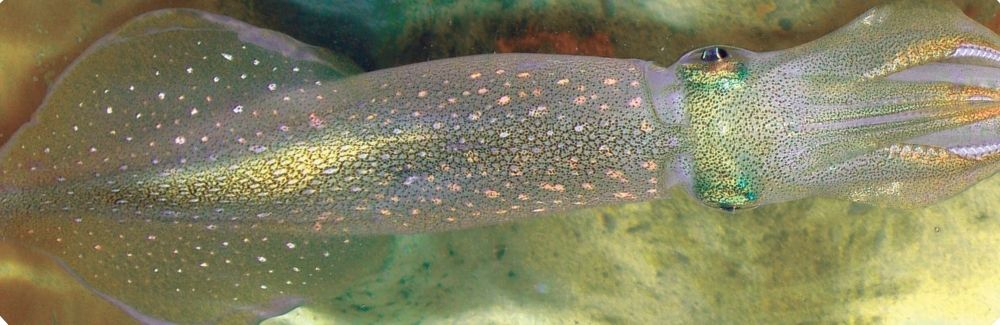
Years ago Dr. Joshua Rosenthal and colleagues made a surprising discovery: cephalopods such as squid, octopuses, and cuttlefish, are highly active RNA “recoders”, making thousands of edits to the genetic instructions inside their cells—far more than other animals. Since then, they and others have demonstrated how a selection of these RNA edits alter protein function. Building on this body of work, a new study from the University of California, San Francisco (UCSF) in collaboration with the Rosenthal Lab at the Marine Biology Laboratory (MBL), dramatically increased the scale at which we can measure what these edits do and how they affect the microscopic machines inside squid cells.
Published on October 15 in Cell, the study, “Functional diversification of the cephalopod proteome by RNA-editing”, addresses what happens to edited RNA in cephalopods. Initiated and led by a talented UCSF Postdoctoral Researcher Dr. Jack Moen, with Dr. Danielle Swaney as the corresponding author, this collaboration brought together experts in proteomic and marine biology from both coasts of the continental United States.
In the simplified central dogma of biology, genes are encoded by DNA and transcribed into temporary messages made of RNA, which are translated into functional products called proteins.
Read more of the article here.
Source: Squids Edit RNA for Novel Protein Functions | UCSF Quantitative Biosciences Institute