Stayin' Alive in Marsh Muck: The Tiny "Snorkels" Cattails Grow Manipulate Soil Chemistry
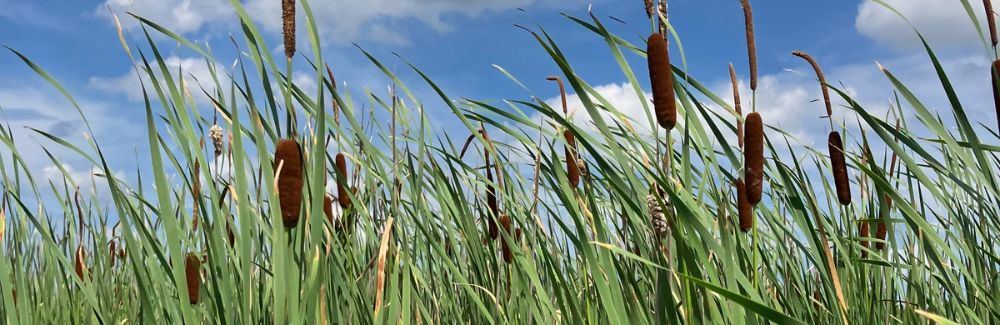
Cattails are a familiar sight in wetlands, where they thrive in both brackish and freshwater marshes. But surviving in waterlogged soil presents a challenge; their roots need oxygen in an environment where very little is available.
Cattails have evolved a solution. Air-filled tubes, called aerenchyma, act like tiny snorkels, carrying oxygen from the above-ground plant down to its roots.
Some of the oxygen, however, escapes from the roots into the surrounding sediment. That leakage can have important consequences for marsh ecosystems, influencing the microbial communities responsible for carbon cycling and methane emissions in the marsh.
It’s a delicate balance. Oxygen helps keep cattail roots alive and growing, supporting the buildup of the sediment platform that allows marshes to keep pace with rising sea levels. At the same time, oxygen leaking from the roots into the sediment has the potential to accelerate microbial decomposition of organic carbon, negatively impacting the marshes’ potential to store carbon.
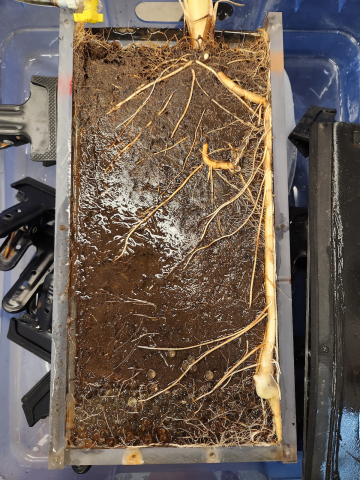
Until recently, scientists didn’t know what conditions caused cattails to release the most oxygen into the surrounding sediment, though in other plants, often the loss is strongest during daytime. Now, in a recent paper published in New Phytologist, scientists from the Marine Biological Laboratory (MBL), Ilana Stein and Zoe Cardon, have identified that the largest oxygen leaks occur when the cattail roots are actively growing, both day and night.
To measure how much oxygen was escaping from cattail roots, Stein and Cardon used oxygen-sensitive planar sensors called “optodes”, made at the MBL by senior research assistant Suzanne Thomas. Attached to one face of clear-sided watertight rhizoboxes, the fluorescence from the optodes was imaged to report oxygen levels in the sediment as the cattails grew.
Understanding when and how much oxygen cattail roots release into the sediment could help scientists develop more accurate predictions about methane and carbon dioxide emissions from the marshes, as well as how best to harness cattails in bioremediation of polluted marsh environments.
Cattail roots don’t grow continuously. Instead, they grow in pulses, beginning in spring. “Our work made us think about the phenology, the seasonal timing, of when the roots will be growing as that's when we're going to expect to see oxygen loss happening,” explains Ilana Stein, a postdoctoral researcher in Cardon’s lab.
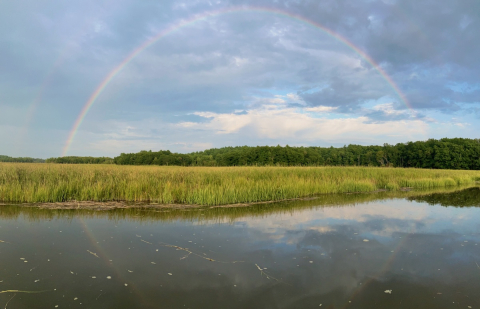
Stein and Cardon’s work, part of the CMarsh project supported by the Simons Foundation, is heavily informed by the data other scientists have gathered over the past twenty-eight years from the Plum Island Ecosystem Long Term Ecological Research (PIE LTER) site north of Boston, where cattails for the rhizoboxes were gathered.
“Long term research sites are so important,” Cardon explains “because they provide extra context, and we have a much richer understanding of what these patterns in oxygenation might mean because we have all of this amazing information that has been gathered over the last twenty years about how this place functions.”
Although the study did not directly measure greenhouse gas emissions, understanding the natural, seasonal processes that influence them could have broader implications.
“Natural greenhouse gas emissions have been happening forever. One of the things that we're trying to learn from this marsh is what emission levers exist that we might be able to work with or learn from to reduce emissions,” Cardon explains. As one of the most abundant monocultures covering marshlands, cattails are particularly important to study as a “lever organism” as scientists continue to improve our understanding of managing greenhouse gases via ecological measures.