From Studying Sea Urchins to Scientific Leadership: Leslie Vosshall’s MBL Journey
When Leslie Vosshall was just 16 years old, a summer at the Marine Biological Laboratory seeded her future scientific career. Now Vice President and Chief Scientific Officer of the Howard Hughes Medical Institute (HHMI), Robin Chemers Neustein Professor and HHMI Investigator at The Rockefeller University, and a newly-elected member of the American Academy of Arts and Sciences, Vosshall traces her scientific path back to Woods Hole.
Her uncle, Philip Dunham, had run a summer lab with Gerry Weissman since the 1970’s and each summer different nieces and nephews had the chance to spend summers washing glassware and exploring all that Woods Hole has to offer—including scientific discovery at the MBL.
Vosshall soon moved from washing glassware to conducting her own experiments. “I initially started just washing glassware, but then got curious about what was going on, and started doing experiments very soon after,” she says, “and then that was it. That was a one-way trip to my life as a scientist.”
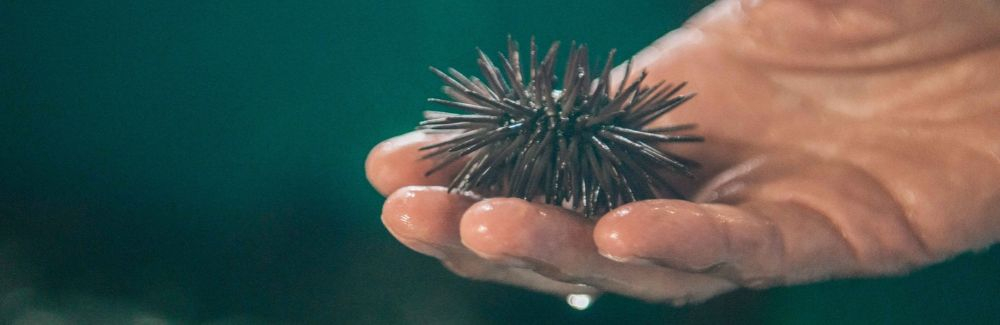
Vosshall’s first experiments explored polyspermy, the fertilization of an egg by more than one sperm. And the MBL provided a perfect model organism – sea urchins – which release their eggs and sperm externally into the water. The work brought her back to the MBL the following summer.
Coming from a small public high school in New Jersey with limited science education, Vosshall was amazed by the breadth of the MBL experience. "To be put into this enormous, vibrant summer community where I could go to the lectures and sit in the library and do research and go to the Physiology course parties was just incredible," she says.
To this day, the MBL’s spirit of play and collaboration continues to shape Vosshall’s approach to science. “I think what the MBL does incredibly well is creating this really loose, joyous atmosphere for scientists to have space to think and interact with each other,” she says. “I love it, and I'm ride or die MBL.”
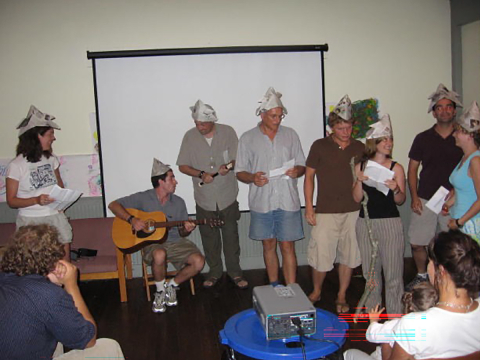
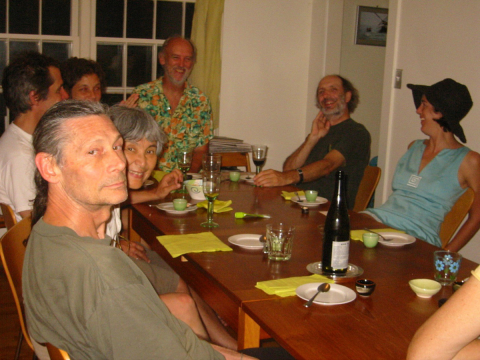
Vosshall has returned to the MBL throughout her career, as both an educator and researcher. In 1994, she was a teaching assistant in the Neurobiology course, and then she returned to the MBL as faculty for the Neural Systems and Behavior course from 2005 to 2007.
Vosshall continues to champion the MBL courses, encouraging her own students to take time away from their home institutions to explore new ideas and approaches. “Two or three months away from the PhD lab to breathe, be loose, and have a little joy is very important,” she explains.
In 2013, when an opportunity came around for Vosshall to return to the MBL to give the Alexander Forbes Lectureship sponsored by The Grass Foundation, she was all in. Over the years, she has watched the Lab grow as a center for imaging and scientific training, but its collaborative spirit continues to be what resonates with her most. Vosshall believes that the MBL experience builds a skill set scientists increasingly need: resourcefulness.
“When you're at the MBL, especially in the courses, you become good at improvising,” Vosshall says. She compares the experience to visiting “an Airbnb for science,” you may not have all the kitchen equipment you are used to, but you learn to improvise, adapt and make do with what is available.
“The whole MBL experience of science is improvising, and learning to become creative and resourceful,” she says. “I think all of that is very good practice for the current time when there is increasing pressure on science funding.”