In the Weeds | Buzzards Bay Coalition
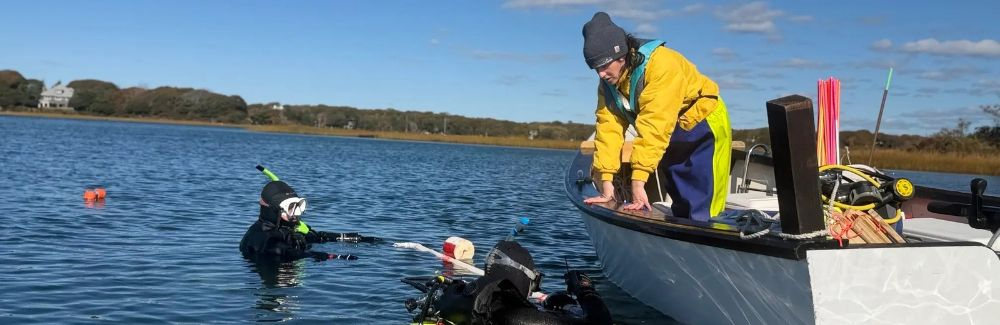
Editor’s note: This article highlights work done by Melanie Hayn with two colleagues from the Marine Biological Laboratory—post-doc Miranda Roethler and technician Sarah Merolla.
Replanting landscapes as a restoration effort can pose a bevy of challenges.
How to get the seeds planted in such large quantities? How to ensure that the soils are conducive for growth and that conditions (water, sunlight, etc.) are best for the seeds to germinate? How to keep animals from eating the young plants as they develop?
Now imagine considering all these concerns for plants in an underwater marine environment?
Eelgrass populations have declined in water bodies around the world due to extreme storms, warming oceans, disease, and most importantly, nutrient pollution. Here in Buzzards Bay, we have lost 75 percent of the Bay’s historic eelgrass coverage, although there are positive signs of recovery as nitrogen pollution levels have dropped in recent years.
Some eelgrass has returned on its own in response to water quality improvements. Others have had to be replanted. More than two decades ago, the Virginia Institute of Marine Science had invented a new approach for harvesting and distributing seeds. Since 2000, more than 71 million seeds have been distributed on more than 500 acres offshore there.