Whitman Fellow Asks Age-Old Question: What’s Behind Our Biological Lifespans?
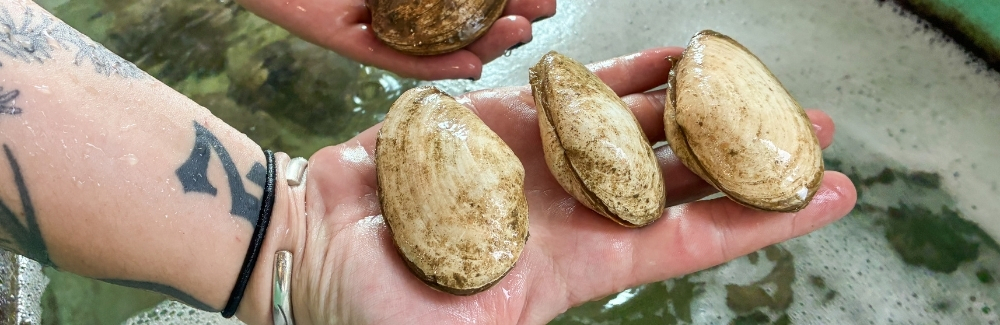
Why do some clams live to be over 500 years old, yet humans usually live to be less than 100? Matthew Harris, professor of Genetics at Harvard Medical School and MBL Whitman Fellow, is trying to find out. His lab studies the genetic pathways that influence longevity in different clam species—research they’ve been doing at the MBL for about two years now. Harris’s work is showing that clams and humans use “very similar pathways” for longevity, and he hopes that his research will eventually reveal what shapes human lifespans, and how we may live healthier, longer lives.
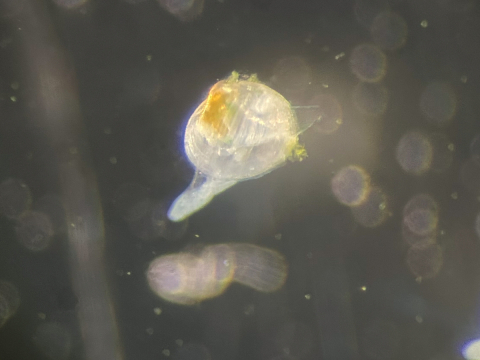
In addition to the existence of startlingly ancient clams, Harris finds these animals to be an ideal longevity subject for many reasons. Logistically, they are simple: they reproduce at high numbers and are easy to cultivate. They also are translucent in their early stages, enabling researchers “to watch development in real time,” Harris explained.
That said, to understand longevity in clams, one needs to understand the clam itself. Currently, the bivalve is not a well-established research organism; part of its genome is still unannotated and known gene editing techniques are limited. So, Harris is establishing the groundwork. “If you don't have the foundations, you can't ask any other questions,” he explained.
Part of this work involves annotating unknown gene functions. When the Harris Lab began studying the genome of the long-lived Arctica islandica clam, only about half of its genes could be matched to vast databases of known genes in other organisms. Since then, they’ve built that number up to roughly 75% using predictive modeling, but what remains is unknown. With so many genes still undescribed, Harris said “there's a whole opportunity of discovery.” Understanding more genes’ properties could indicate pathways that tie into longevity as well as other key aspects of how organisms function.
To understand gene function, the lab is working to identify effective gene editing techniques for clams. Last summer, they found electroporation of sperm to be promising. Electroporation is a process in which electric jolts make small holes in cells, allowing researchers to insert DNA molecules into them. While they’re still refining this technique for clams, success could allow the lab to experiment with different pathways of interest and eventually to modify clams’ lifespans.
Establishing clams as a research organism has the potential to support other areas of research too. According to Indiana Olson, a research technician in the Harris lab, “better understanding how these bivalves build their shells can give us an insight into things like brittle bone disease and different osteoporosis variants.” Additionally, understanding how clams incorporate and encapsulate heavy metal pollution into their shells, as a sink, could inform climate change solutions.
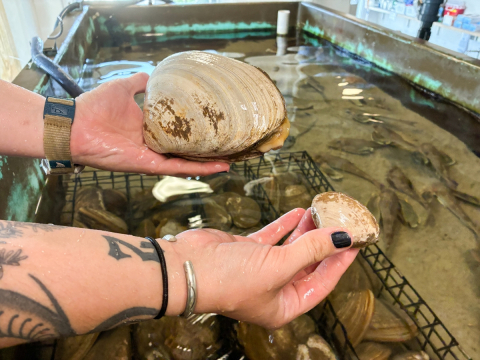
As for longevity, Harris said we can’t expect a magic bullet gene that can lengthen our lifespans. However, understanding the systematic pathways that control longevity—our genetics, growth rates, reproductive cycles, and more—may help reveal why we have the biological lifespans we do, and how evolution has shaped them.
Whatever the answers may be, Harris appreciates having the freedom to ask these questions at the MBL. “The Whitman fellowship is key for us because it allows us to do the unique experiments that we can't do otherwise,” said Harris. Plus, added Olson, “It’s super rewarding to be early to the clam craze.”