MBL Alumnus Karl Deisseroth Wins 2026 Nobel Prize in Physiology or Medicine
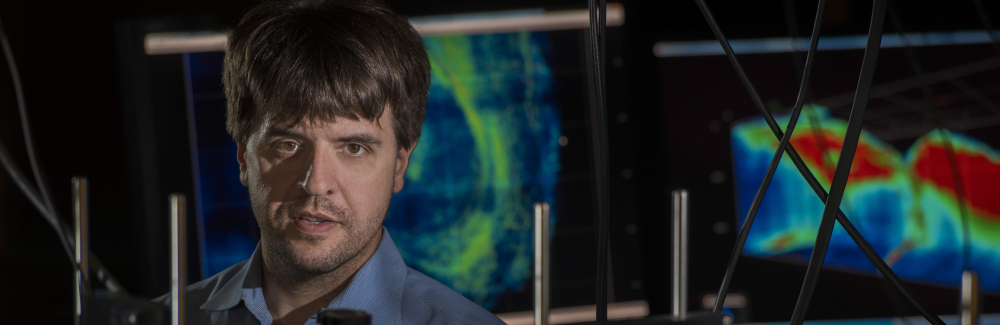
The Marine Biological Laboratory (MBL) congratulates Karl Deisseroth, MD, PhD, on being named a co-recipient of the 2026 Nobel Prize in Physiology or Medicine “for his discoveries concerning light-gated ion channels and optogenetics.”
Deisseroth shares the prize with Peter Hegemann of Humboldt University of Berlin and Georg Nagel of the University of Würzburg for their discoveries concerning light-gated ion channels and optogenetics—a technology that allows researchers to control the activity of individual neurons using light, giving scientists a powerful new tool for studying how the brain works.
A professor of bioengineering, psychiatry and behavioral sciences at Stanford University, Deisseroth has a long history with the MBL, first coming to Woods Hole as a student in the Methods in Computational Neuroscience course in 1997. He returned to the MBL as a lecturer in the Neurobiology course in 2007 and 2008, joined the course faculty in 2009, and later served as a lecturer in Methods in Computational Neuroscience in 2013.
“Karl’s Nobel Prize is an extraordinary recognition of his transformative contributions to neuroscience and our understanding of the brain,” said Nipam Patel, MBL Director. “We are proud to celebrate Karl as a member of the MBL community. He first came to the MBL as a student and returned over the years as a lecturer and faculty member, sharing his curiosity, expertise, and enthusiasm for discovery with generations of MBL students. We extend our warmest congratulations to Karl on this extraordinary achievement.”
Read more about Karl Deisseroth and his Nobel Prize-winning research in Stanford Medicine’s announcement.
Related Stories:
Catalyst Magazine Vol. 7 Fall 2012 - A Revolution
MBL Alumnus Receives Shaw Prize for Contributions to Optogenetics