Blood of Blue: The Hidden Value of Horseshoe Crabs | FFA
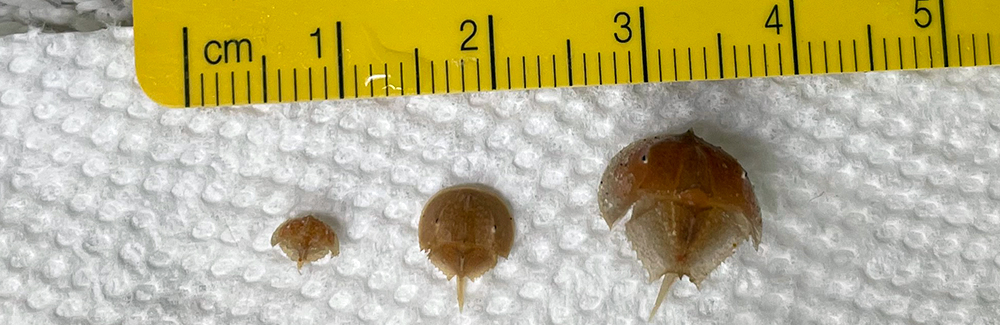
The Marine Biological Laboratory’s Marine Resources Center (MRC) provided fertilized horseshoe crab eggs for students at Bristol County Agricultural High School in Dighton, Massachusetts, to raise for release, supporting hands-on learning in marine biology and conservation.
On a calm summer evening along the Northeastern coastline, a dark shape emerges from the waves. Ten legs gently press into the sand beneath its rounded shell as the full moon reflects off its surface. It pauses, ancient, quiet and steady. This is the horseshoe crab, a living fossil that has existed for over 400 million years — long before the dinosaurs ever roamed the Earth.
Native to the East Coast, the horseshoe crab (Limulus polyphemus) is one of nature’s most fascinating survivors. Reaching lengths of up to 24 inches, these unique invertebrates play a crucial role in coastal ecosystems (National Wildlife Federation, n.d.; U.S. Fish & Wildlife Service, 2024). Despite their intimidating tails, known as telsons, horseshoe crabs are harmless. They use their tails to flip themselves upright when overturned, a clever adaptation for life along the shifting shoreline.
Their most extraordinary feature lies within their bright blue blood. This blood contains a special protein called Limulus Amebocyte Lysate (LAL), which is used by scientists and doctors worldwide to test vaccines, surgical implants and medical equipment for the presence of dangerous bacteria. Thanks to this natural compound, millions of lives have been protected through safe medical advancements. Read more of the article here.
Source: Blood of Blue: The Hidden Value of Horseshoe Crabs | FFA (Future Farmers of America)