Emil Ruff Leads Team to Explore Dark Oxygen Through NASA Collaborative Award
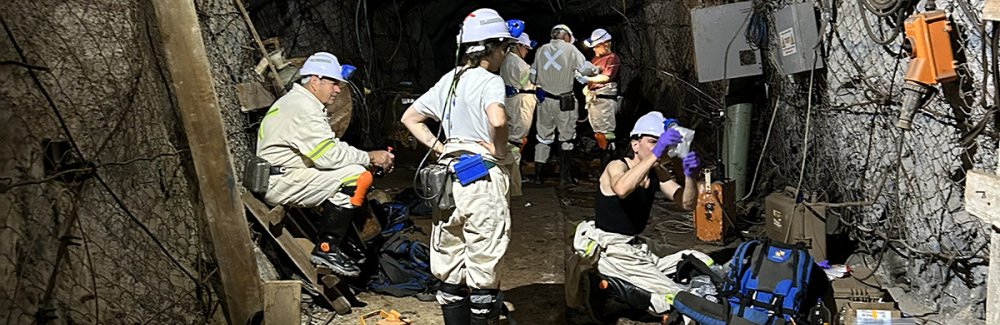
For more than a century, textbooks asserted that molecular oxygen (O2) on Earth is produced almost entirely by photosynthesis, through plants and microbes. But discoveries over the past decade have overturned this foundational assumption. Scientists have detected substantial amounts of O2 in places where it shouldn’t exist, where sunlight never reaches. These findings reveal that O2 can be naturally generated in complete darkness on a large scale, through both biological and nonbiological processes.
In response to this emerging paradigm shift, MBL Associate Scientist Emil Ruff has received a grant from the NASA ICAR program for the project, “OxyMoRon: Understanding dioxygen production and consumption in apparently anoxic environments.”
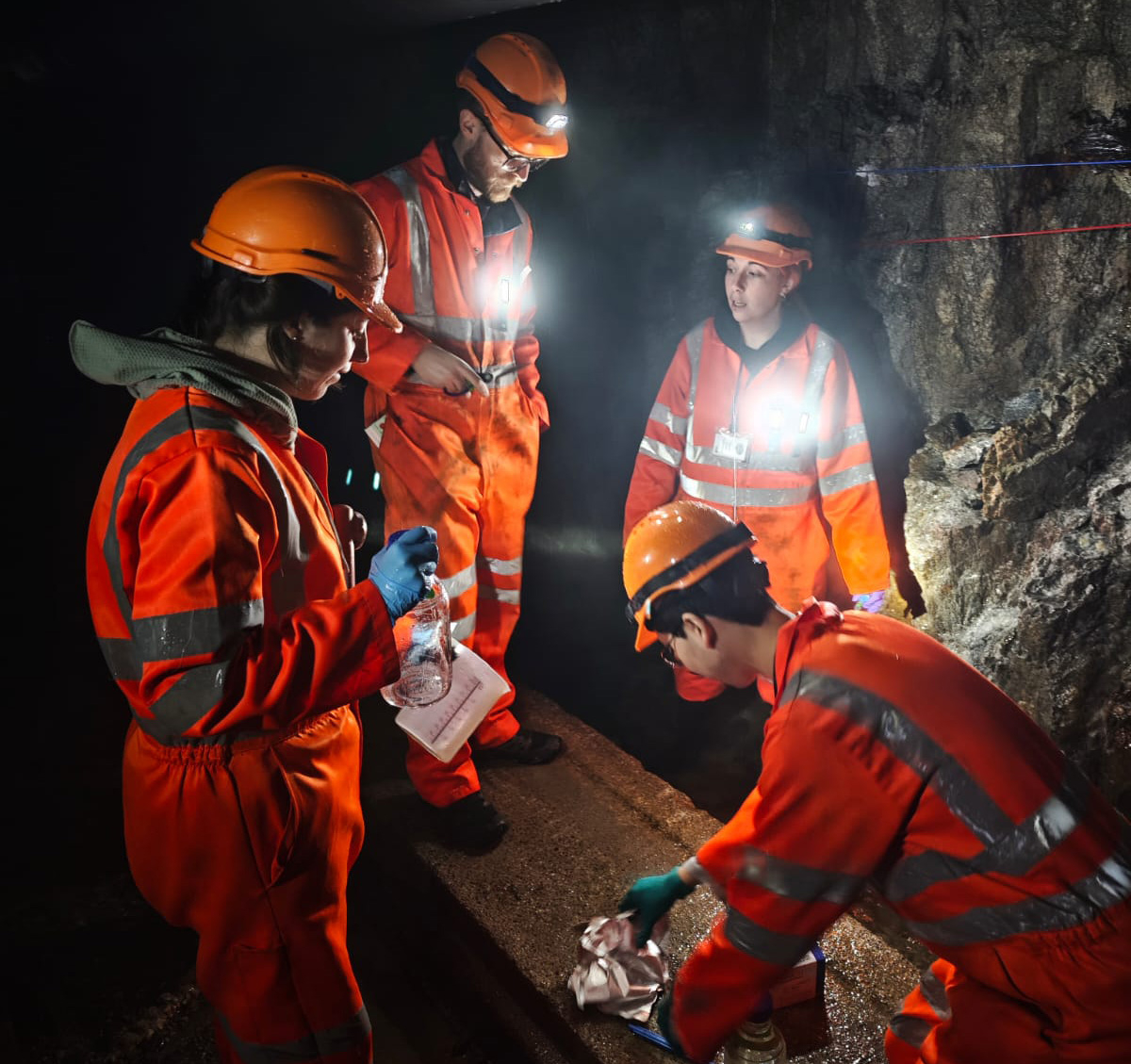
Co-investigators on the grant include MBL Adjunct Scientist Valerie De Anda (University of Vienna), Associate Scientists Scott Wankel, Maria Pachiadaki and Valier Galy (Woods Hole Oceanographic Institution (WHOI)), and Assistant Professor Ranjani Murali (University of Nevada, Las Vegas).
“Photosynthesis was considered the only process generating O2 in amounts large enough to impact Earth’s environments. So, it was thought that O2 could only be found abundantly in ecosystems that are sunlit or are in direct exchange with sunlit places,” says Ruff. Ecosystems doused in permanent darkness – deep groundwater and rock pockets – should not have measurable quantities of dissolved O2 in their waters.
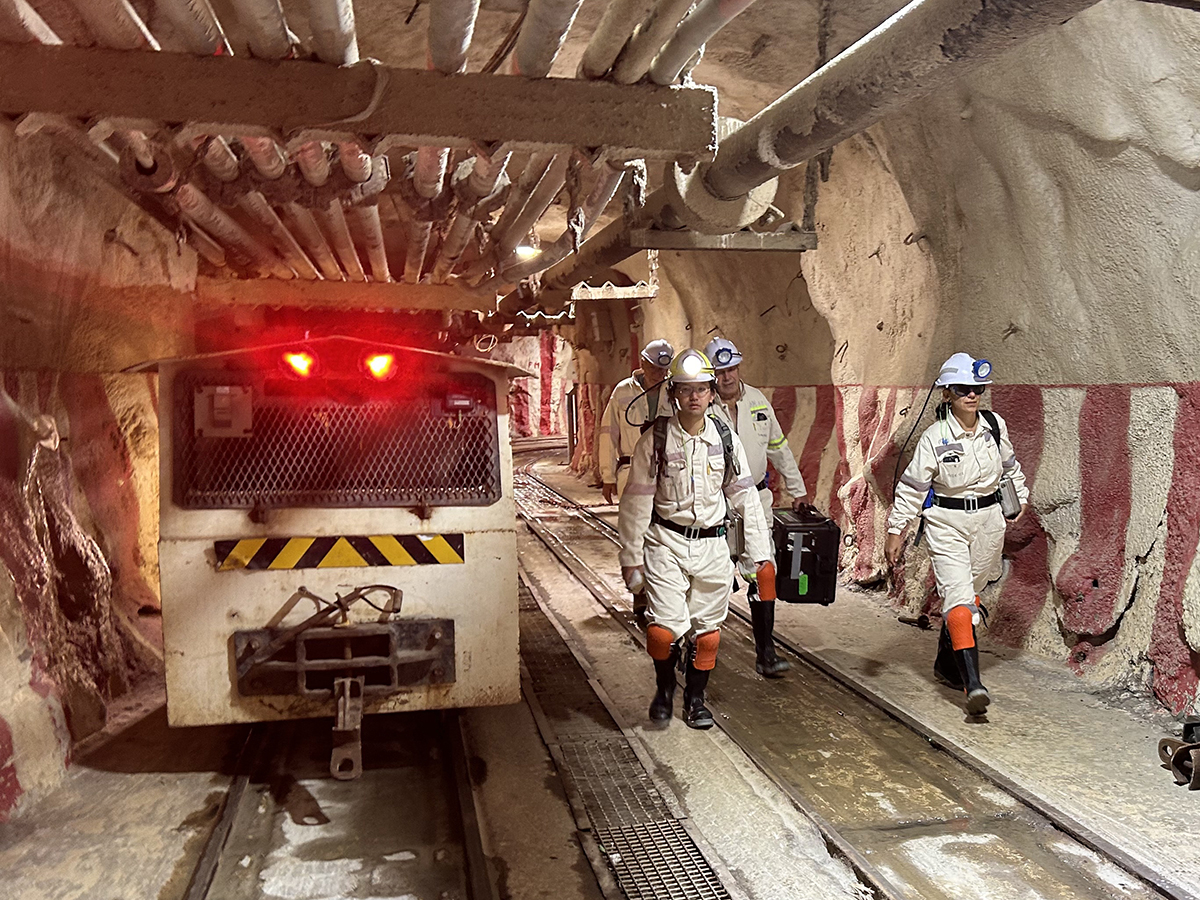
A few years ago, however, Ruff and an international team of scientists found traces of dissolved O2 in an unexpected place: inside deep groundwater wells, in waters that hadn’t had contact with the sunlit surface for thousands of years. Now, the researchers are wondering whether this phenomenon may have been relevant in environments of early Earth or even beyond Earth – an investigation that will be explored in the NASA grant awarded to Ruff and his colleagues.
“The search for extraterrestrial life is of major interest to NASA,” Ruff says. “Yet we first need to understand how life works on Earth before we can understand its potential traces elsewhere. What kind of traces does dark oxygen production leave behind?”
“If we can identify reliable signatures of these processes on Earth, we can better interpret future observations from missions exploring ocean worlds and other extraterrestrial environments,” adds co-investigator Valerie De Anda.
Oxygen without sunlight
Microbes that produce O2 in the absence of sunlight seem to be relatively widespread throughout subsurface ecosystems. Ruff and colleagues, for instance, found echoes of O2 in numerous groundwater ecosystems across diverse geographical areas.
Ancient groundwaters should be free of O2, Ruff says, because it is quickly used up by organisms or chemical processes. And, using isotopic analysis, his team ruled out the possibility the groundwater had been contaminated with atmospheric O2 during drilling and sampling. The scientists had tapped into something more profound: Microbes deep underground apparently were eking out O2.
This finding, along with recent genomic evidence, suggests that O2 produced in complete darkness – so-called “dark oxygen production” – could be relevant on a global scale, Ruff says.
Following these insights, Ruff and collaborators are confident that these are widespread processes, with implications that could signify the evolution of life on Earth and beyond. Such possible outcomes sparked questions related to the role of dark oxygen production for subsurface carbon cycling, one of the main research aims in the NASA grant.
The search for dark oxygen production
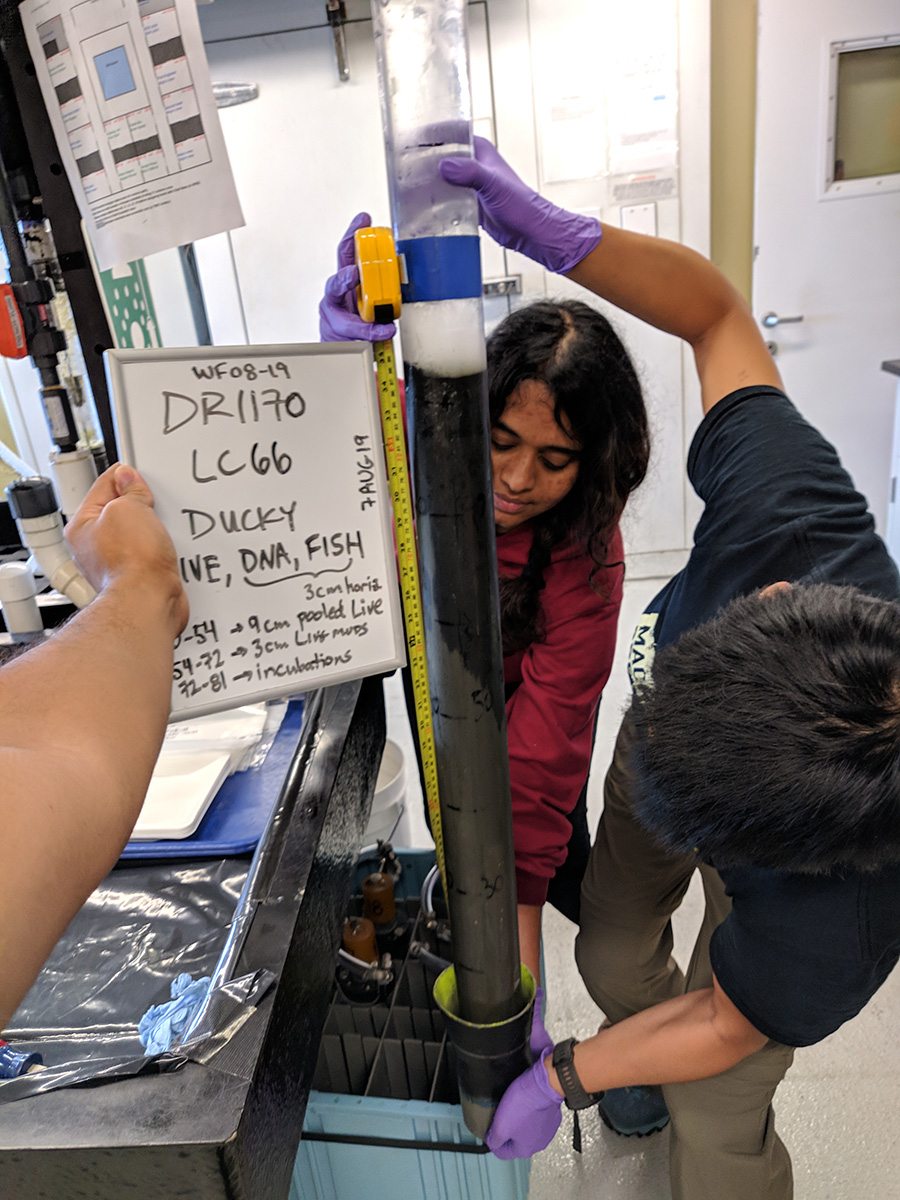
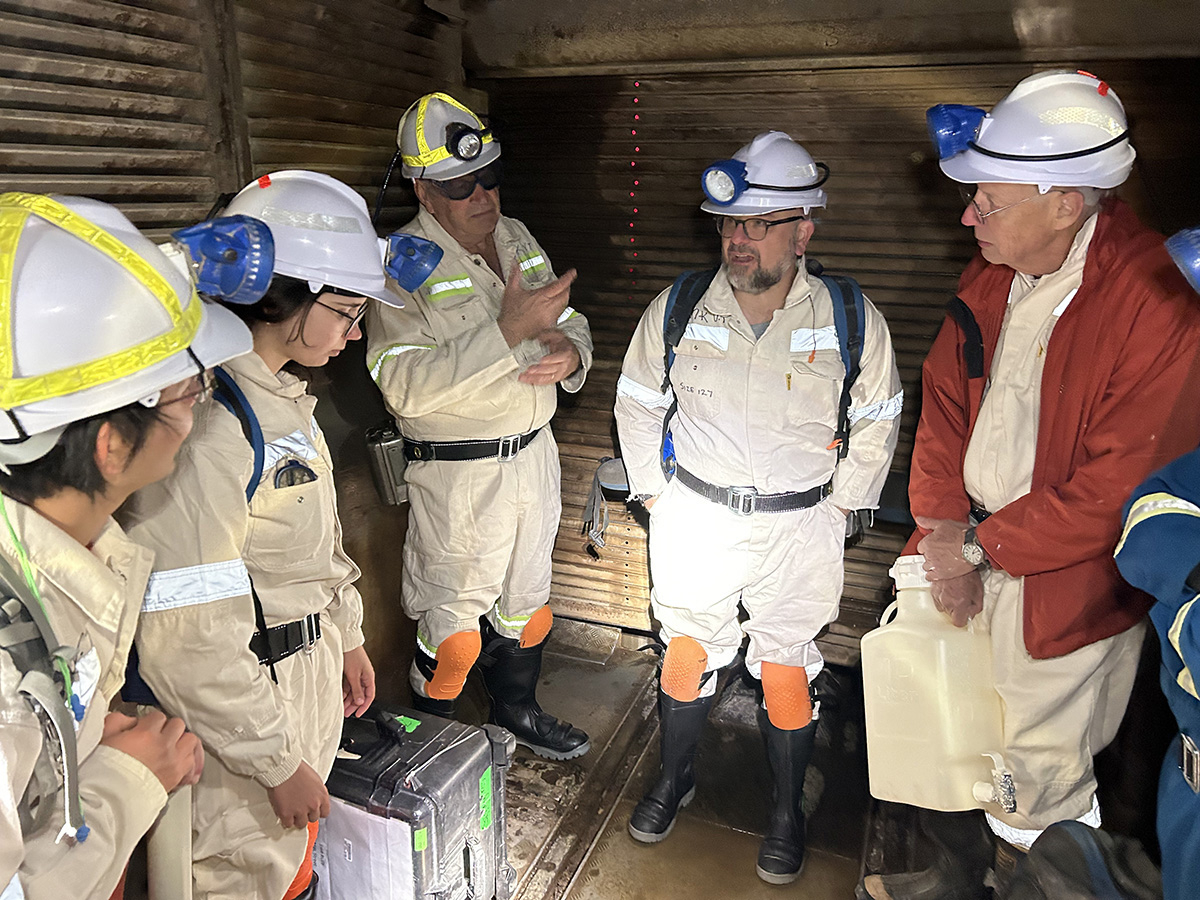
Spanning a range of ecosystems – from the sea floor to deep within the Earth – specialists in geochemistry, molecular biology, bioinformatics, and proteomics will investigate where dark oxygen production has occurred in sunless places under this grant.
Earth’s atmosphere, waters, and minerals carry an imprint of O2. We can use isotopes to trace the origins of oxygen atoms and shed light on processes, but further tools are needed to more accurately fingerprint these signatures, says co-investigator Scott Wankel. Methodological development and the improvement of isotope detection will be a major aim in the grant, spearheaded by Wankel and Valier Galy, an expert in organic geochemistry.
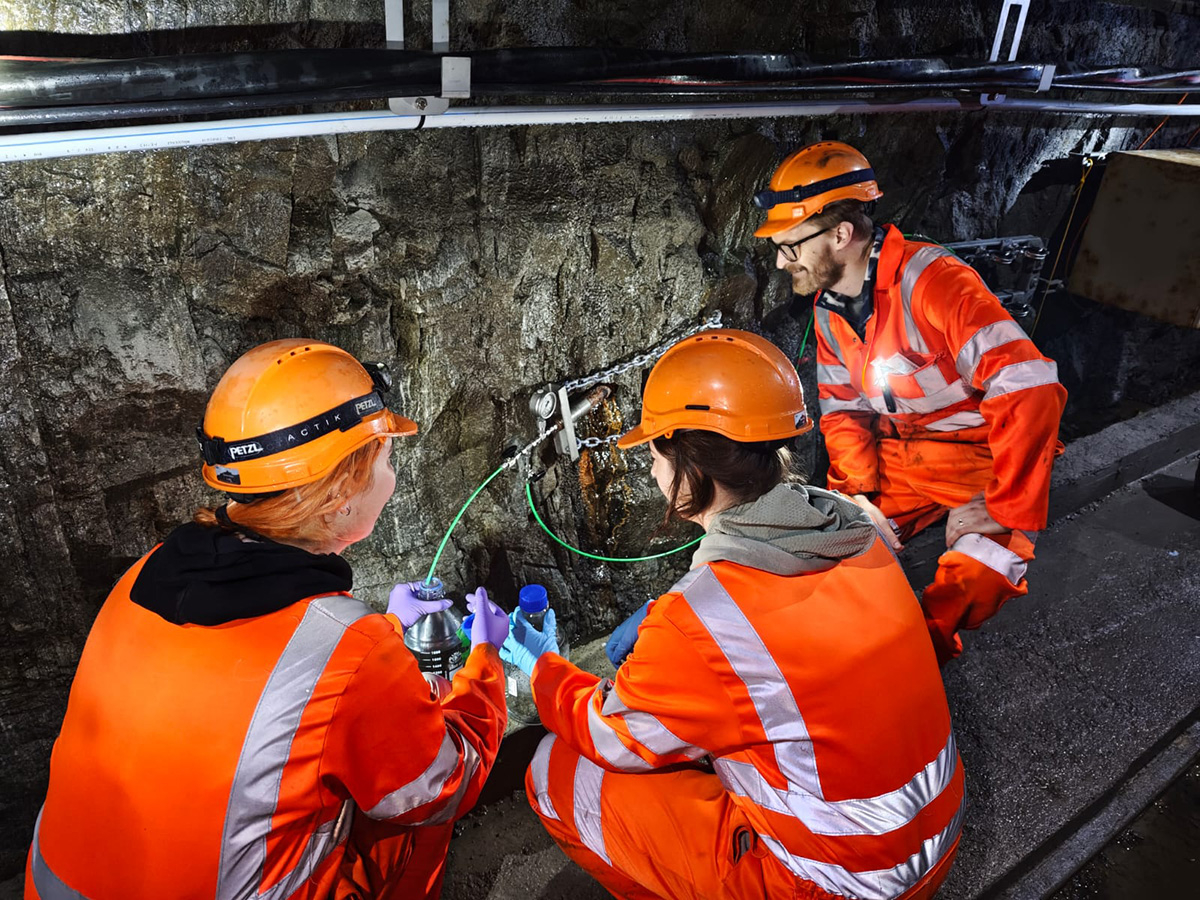
To uncover where and how dark oxygen production occurs on Earth, the team will conduct a global survey of microbes capable of producing dark oxygen by integrating nucleic acid and protein analyses from a wide range of apparently anoxic ecosystems. Complementary single-cell genomic analyses will unveil the metabolic contexts in which dark oxygen is generated.
An additional goal is to trace the evolutionary history of dark oxygen production. To date, the evolutionary origins of dark oxygen production are unclear, says co-investigator Ranjali Murali. With a deeper understanding of when and how dark oxygen production evolved, researchers can begin to hypothesize where else the process might occur (or has occurred) – such as the deep rock layers of Mars.
“This is a truly interdisciplinary endeavor,” says co-investigator Maria Pachiadaki. “By integrating methods and expertise across institutions, we can tackle questions no single discipline could address alone.”