How Scientists Learn From the Masters of Invisibility: Octopuses | National Geographic
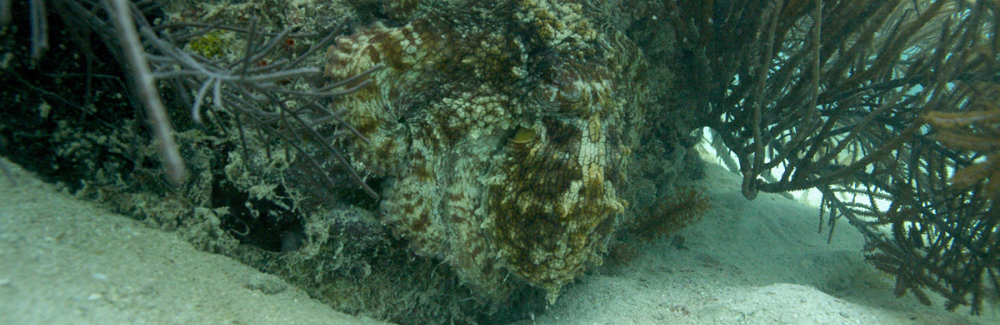
Editor's Note: This article discusses MBL Senior Scientist Roger Hanlon's recent Science paper and his lab's other work on cephalopod camouflage.
When it comes to near-invisibility, the world champions may be the octopus and other cephalopods, which can shift their color and texture on cue to become virtually indistinguishable from their surroundings. As an octopus glides across sand, tucks itself between rocks, and wriggles into a clump of seaweed, its color and texture shift continuously, transforming from grainy beige to mottled grey to iridescent green to match different backgrounds. Squid, too, have an uncanny ability to trick the eye, turning shiny, iridescent, and even transparent against the flickering background of underwater light.
How cephalopods achieve this instantaneous camouflage is a mystery that has tantalized humans since at least 350 BCE, when Aristotle made observational notes on the subject, says Leila Deravi, associate professor at Northeastern University, whose BioMaterials Design Group specializes in biomimicry.
Read more of the article here.
Source: How scientists learn from the masters of invisibility: octopuses | National Geographic