‘Superarm’ Helps Male Octopuses Deliver Sperm to Females | Science
Cephalopod expert and MBL Senior Scientist Roger Hanlon provides comment.
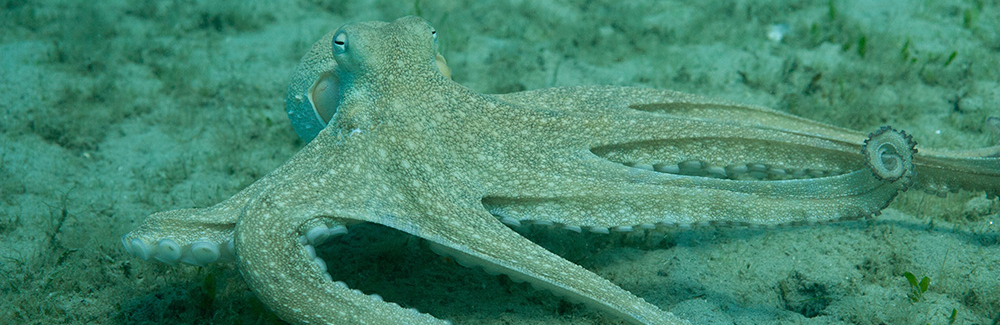
Octopus mating typically occurs at arm’s length. The male uses a specialized arm called a hectocotylus to reach into the female’s mantle cavity, where he must literally feel around in the dark to deliver sperm. How the male carries out this blind searching has been a mystery. The key, according to a new preprint posted to bioRxiv, is chemical receptors in tiny sucker cups that can detect progesterone, one of the main female sex hormones.
“This paper really excites me,” says Roger Hanlon, a sensory ecologist at the Marine Biological Laboratory who was not involved. “And frankly, I’m not that easily excitable.” The discovery raises the possibility that female octopuses, like other kinds of animals, may be able to covertly influence whether males can deliver their sperm, he says. This kind of female influence on reproduction, he says, “is a big question for sexual selection theory for all animals.” Read rest of the story here.
Source: ‘Superarm’ helps male octopuses deliver sperm to females | Science