Earth Day Spotlight: How the MBL’s Ecosystems Center Studies a Changing World
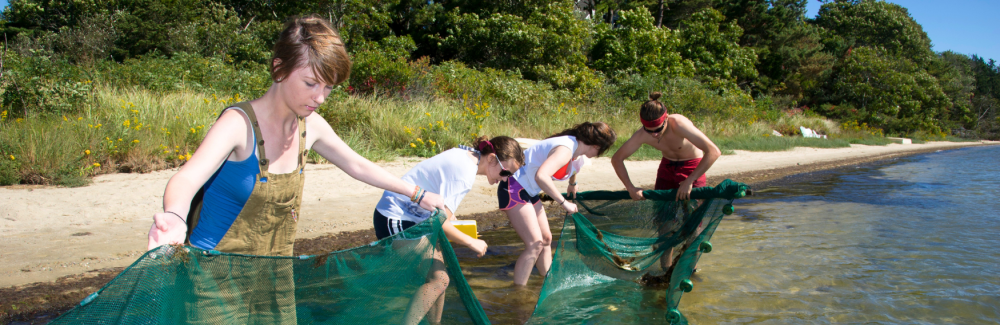
Founded in 1975, the Ecosystems Center at the Marine Biological Laboratory was established to investigate how Earth’s natural systems function. In the decades since, ecosystems around the globe have become increasingly vulnerable to human-driven change, expanding both the urgency and scope of research at the MBL.
Scientists at the Ecosystems Center address these challenges through a combination of long-term observations, experimental studies, investigations into underlying controls and mechanisms, and systems-level modeling. Their work focuses on understanding how ecosystems respond to global change, advancing knowledge of the critical roles microbes play in the environment, and identifying pathways to greater ecosystem sustainability. Education is also central to their mission, as they train and inspire the next generation of scientists.
To celebrate Earth Day, this week the MBL is highlighting initiatives from Ecosystems Center that are advancing our understanding of the vulnerability of natural systems to global change and investigating sustainable solutions for managing and restoring ecosystems.
DEEP OCEAN
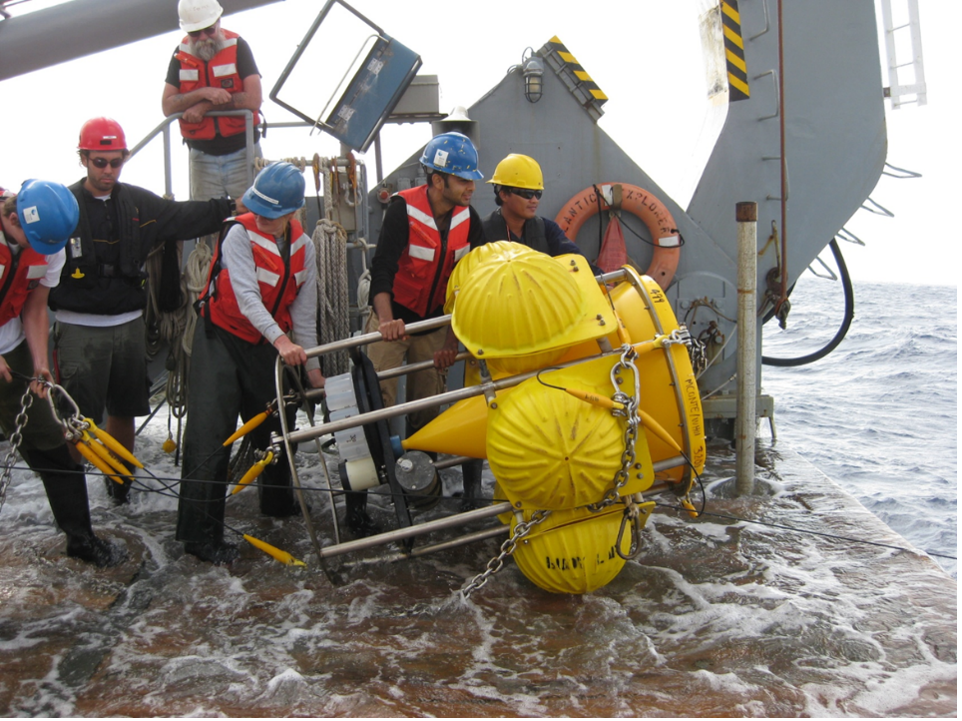
During Earth Week, Assistant Scientist Rut Pedrosa and other members of her lab are at sea measuring the flux of particles to deep ocean. Her measurements are part of the Ocean Flux Program (OFP) which began in 1978 and is one of the longest running continuous time-series of its kind. The OFP has produced a unique record of the temporal variability in the flux of material from the surface to the deep ocean, resulting from the interplay between physical, biological and chemical processes, otherwise known as the “biological pump.” These measurements quantify a critical part of the world’s carbon cycle and reveal how the biological pump may be changing with climate.
FOREST SOILS
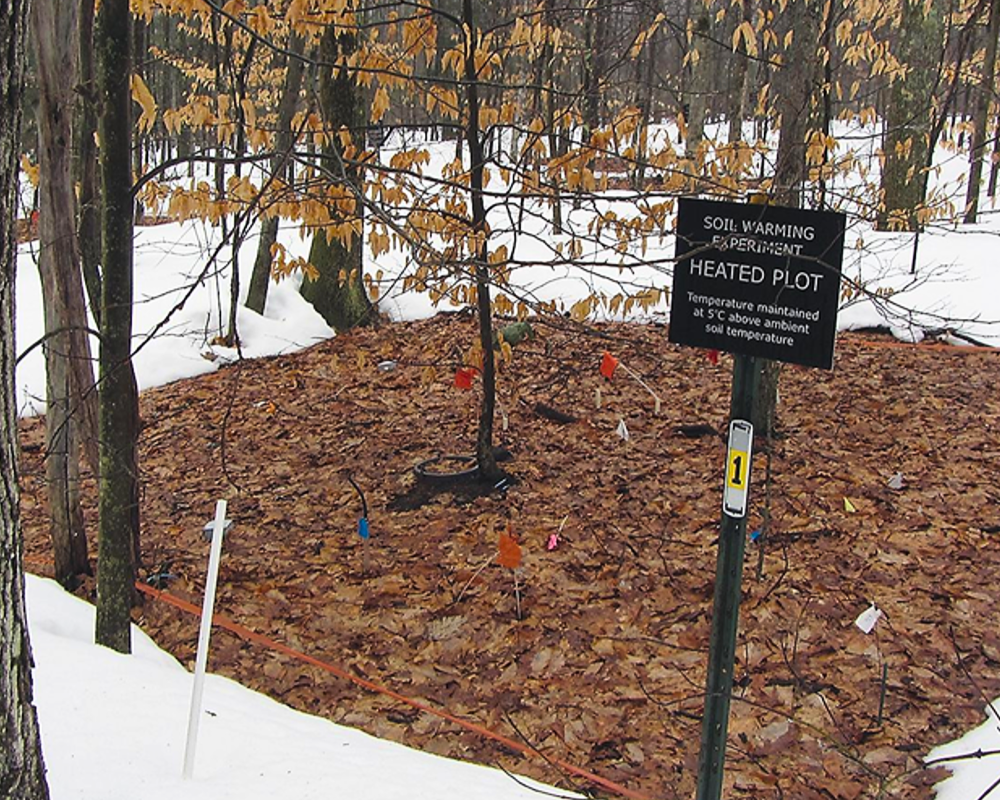
In 1991, as part of the Ecosystem Center's climate change research program, Jerry Melillo and a team of scientists began what is now the world's longest-running forest soil warming experiment. Data from this ongoing 36-year study in Harvard Forest suggests that in a warming world, self-reinforcing and potentially uncontrollable carbon feedback may develop between forest soils and the climate system. This process may add to the buildup of atmospheric carbon dioxide from fossil fuel burning and could accelerate global warming.
EUTROPHICATION
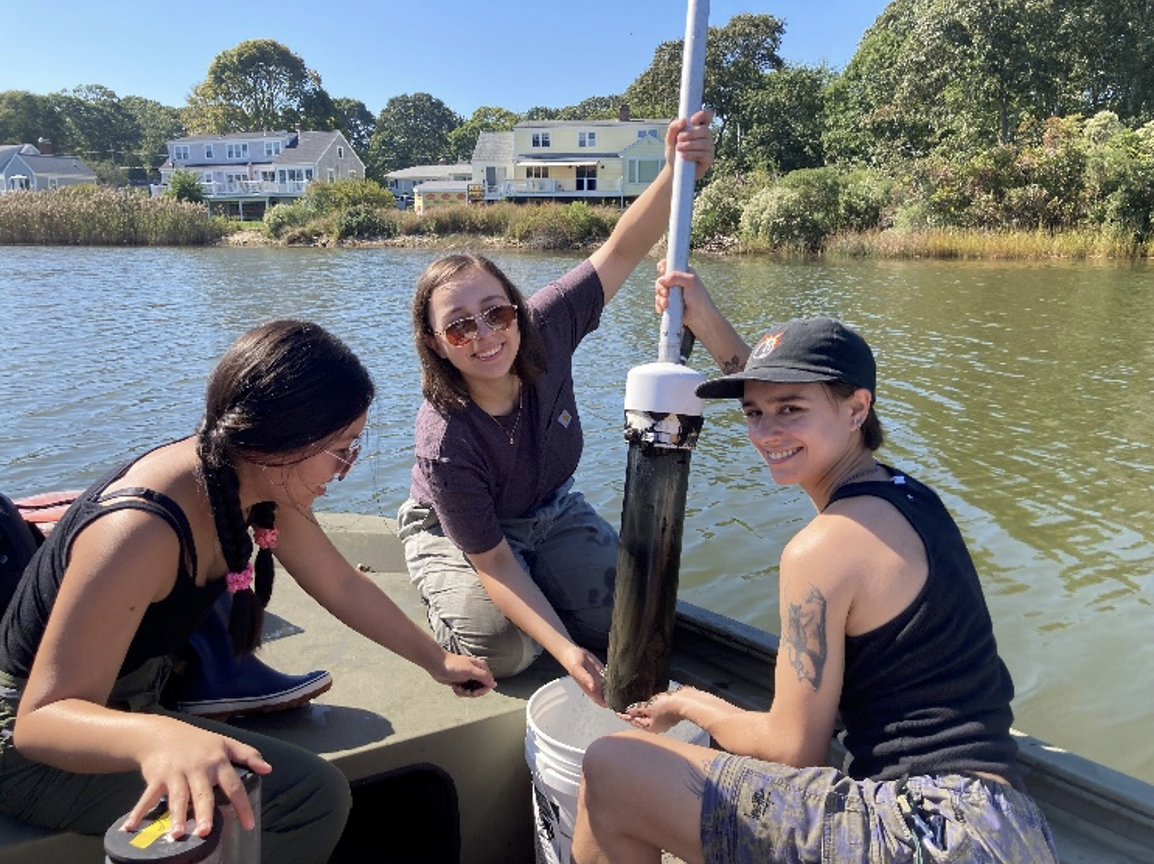
One of the most serious threats to coastal ecosystems, both locally and globally, is eutrophication and hypoxia/anoxia caused by excess nutrients from fertilizer and wastewater entering nearshore waters. On Cape Cod, more than 30 bays and estuaries have been designated as impaired due to nutrient pollution, and communities have been required to develop solutions, often involving costly sewer installations. This has created an opportunity to study how these ecosystems recover. Together, scientists from the Ecosystems Center and Woods Hole Oceanographic Institution have been examining changes in Little Pond, where wastewater diversion began in 2016. This mitigation has reduced nutrient inputs by about 80% and has allowed researchers to track the ecosystem’s response over time. This research work will help answer both basic and applied questions about the role of nutrients in the functioning of estuaries.
SALT MARSHES
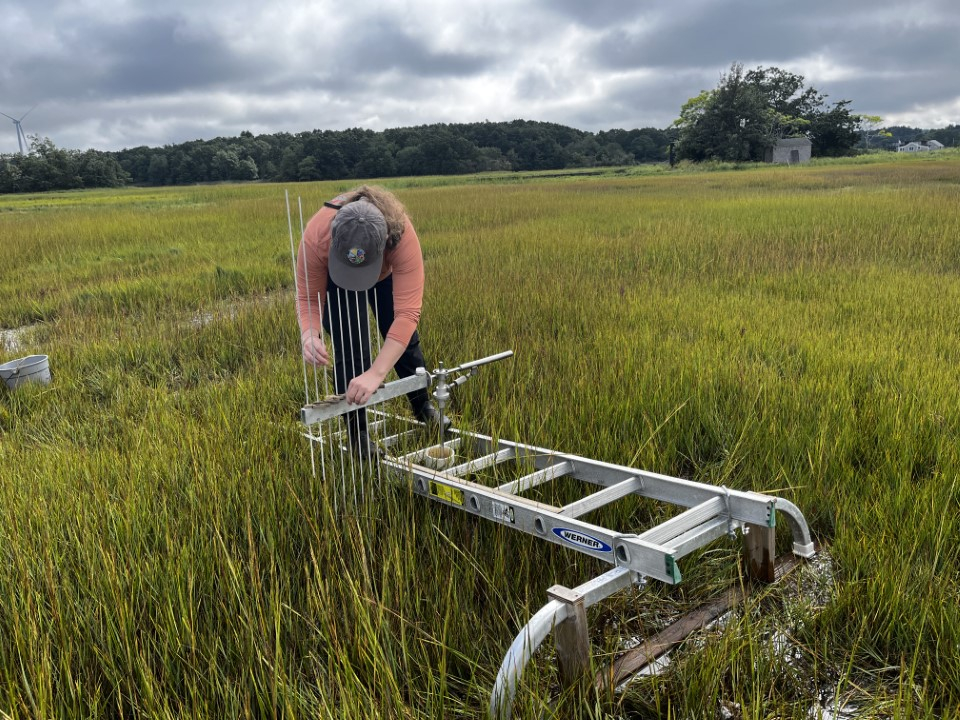
Salt marshes provide a host of ecosystem services to humans. Salt marshes help protect the coast from storm surge, store carbon from the atmosphere as peat, act as nursery grounds for fish, support rich shellfish beds, and are important foraging areas for birds and wildlife. Scientists at the Ecosystems Center have been studying salt marshes for over four decades, gathering information to determine if marshes are keeping up with sea level rise and whether marshes can be made more resilient. At the Plum Island Ecosystems Long-Term Ecological research site, scientists have been directly measuring how much carbon dioxide is being captured by marsh grasses and how much peat is being stored. Carbon dioxide capture is measured using “eddy flux” towers that constantly measure the amount of carbon dioxide moving between the ground and the atmosphere. The increase in sediment, called “sediment accretion,” is measured over decades using dated sediment cores. Short-term accretion is assessed using special installations fixed deep in the sediment that make precise measurements of how the sediment height has changed relative to this static benchmark. The results of these studies suggest that Plum Island marshes should persist into the next century if sea level rise is less than 1 centimeter per year.
MARSH PLANTS
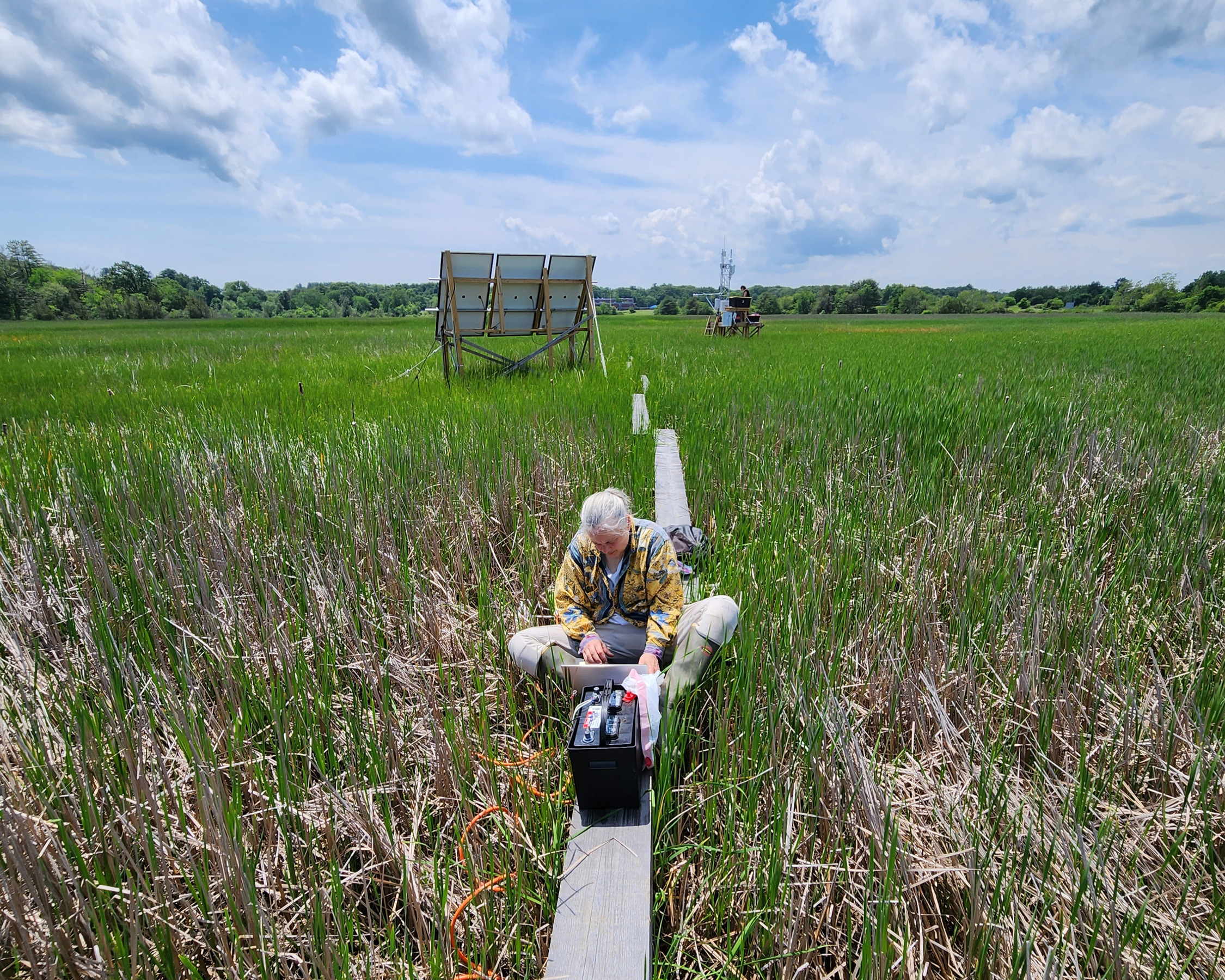
Along coastlines, including Cape Cod near the Marine Biological Laboratory, vegetated marshes play a key role in protecting against sea
SEAGRASS MEADOWS
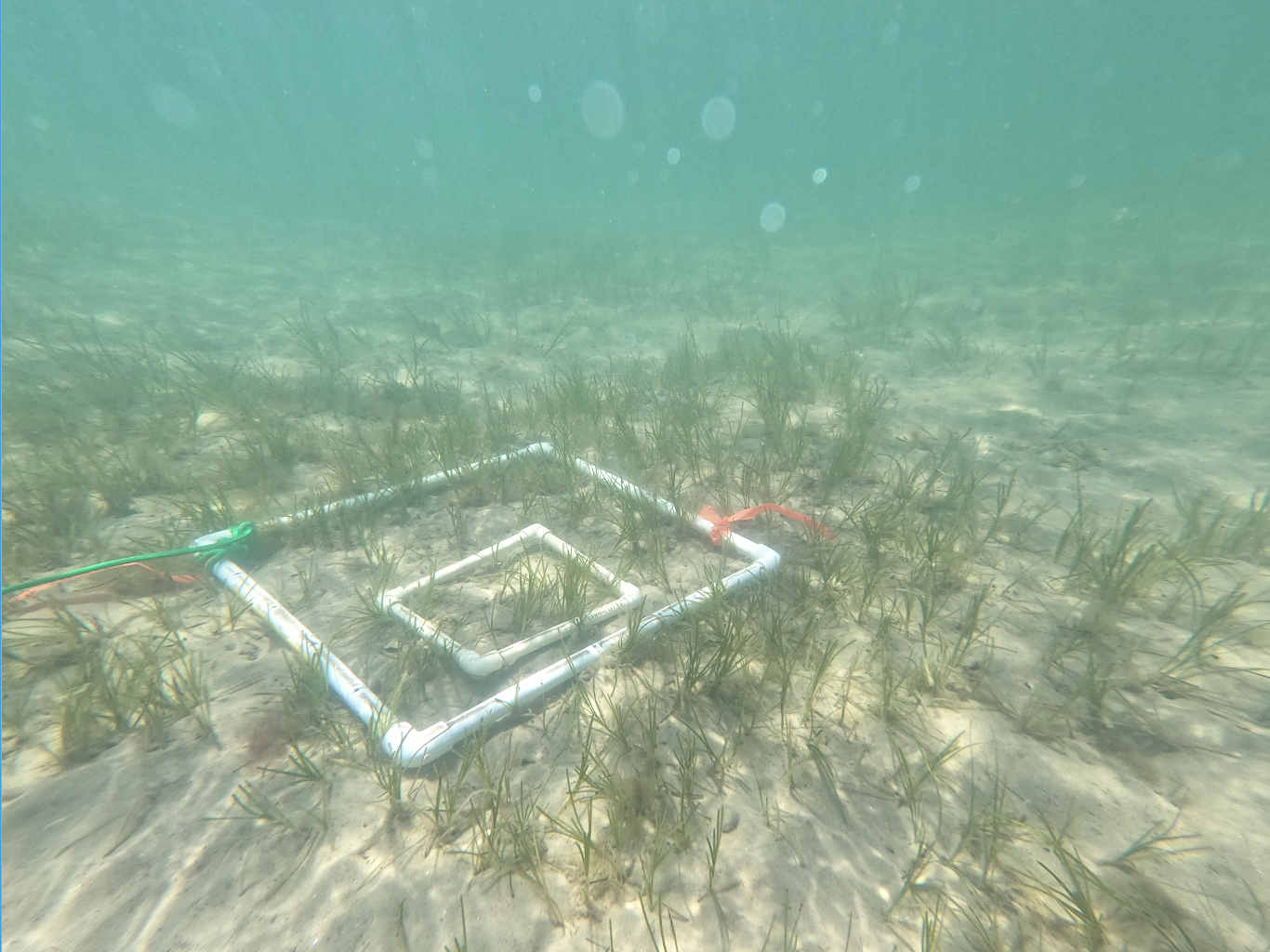
Seagrass meadows, once abundant across Cape Cod, are rapidly disappearing, and restoration efforts have often met with limited success. Researchers in Mirta Teichberg’s lab are working to improve restoration outcomes by testing methods to cultivate and transplant seagrass. Beginning with seeds about the size of a grain of rice, plants are grown either under controlled culture conditions or in seawater tanks at the Marine Resources Center that mimic natural environments, then transplanted and monitored to determine which approaches are most effective. Complementing this work, Izac Rebres is developing tissue culture methods as part of the SeaGEN project, investigating how seagrass cells can be induced to form a callus, an undifferentiated mass of cells that can regenerate into whole plants, under controlled conditions. Both will offer a potential alternative to traditional restoration approaches. Abigail Skena is also studying how planting strategies influence early eelgrass survival, examining whether denser groupings of seedlings can reduce stress from water movement and improve establishment. Together, these efforts aim to identify practical strategies for restoring seagrass meadows, a critical coastal habitat.
EDUCATION
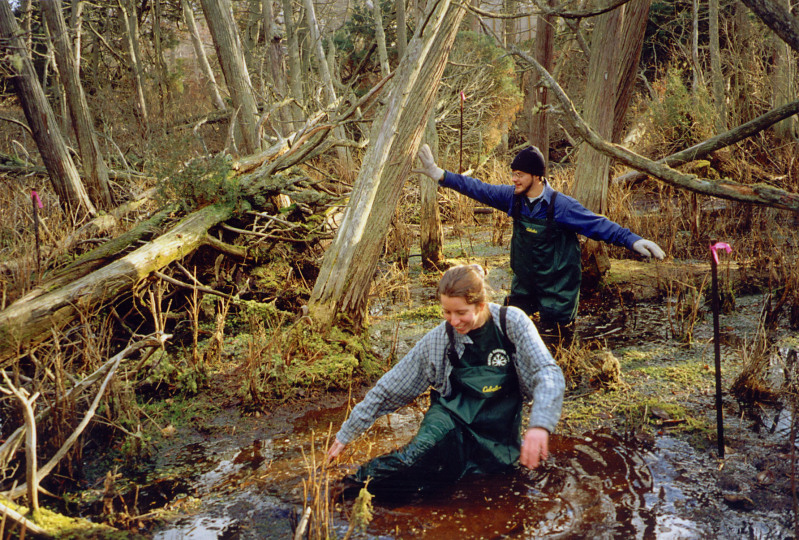
The Semester in Environmental Sciences (SES) course began in 1997 to provide hands-on environmental research experience for undergraduates. Starting from the first year, students conducted independent projects such as sampling cedar swamps, setting the tone for the program’s focus on field-based learning. Since then, SES has influenced hundreds of students, with over 70% going on to pursue environmental science careers in academia, industry, and government. One example is Sam Kelsey, shown above, who was in the very first SES class. Sam returned to the Marine Biological Laboratory after graduating and now works at the Ecosystems Center, contributing to long-term research while helping train future scientists.
Following its 50th anniversary last year, the Ecosystems Center continues to build on a legacy of impactful research and discovery. While these are not all the projects happening at the Ecosystems Center, the ones highlighted reflect the center’s commitment to understanding and sustaining the natural world. Their work serves as a reminder of the complexity of the planet’s ecosystems and the growing demand to find solutions as environmental challenges grow.
Zoe Cardon, Ken Foreman, the Teichberg Lab, Jerry Melillo, and Rut Pedrosa contributed to this article.