From Fins to Fingers: A Fresh Perspective on Repeating Body Parts and Their Origins | Science Magazine
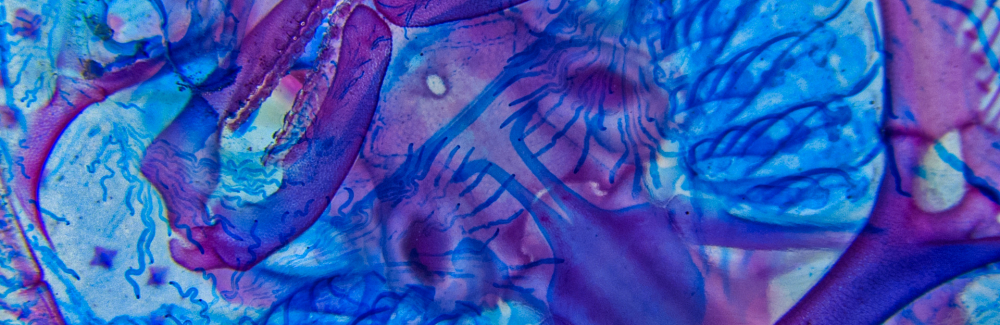
In the intricate tapestry of evolutionary biology, the origin and development of paired fins in jawed vertebrates have long posed a captivating puzzle. A fresh and compelling study from the Marine Biological Laboratory (MBL) in Woods Hole, Massachusetts, spearheaded by associate scientist Andrew Gillis, has shed new light on this enigma. Drawing on nearly two decades of meticulous research initiated during his doctoral studies with Neil Shubin at the University of Chicago, Gillis and colleagues challenge conventional notions about serial homology and offer a transformative developmental perspective on the evolutionary links between gill arches and paired fins.
Published in the prestigious Proceedings of the National Academy of Sciences, this groundbreaking work advances a novel conceptual framework centered on “shared competence” — the ability of two distinct embryonic cell lineages to give rise to analogous adult structures. The research zeroes in on the little skate (Leucoraja erinacea), a cartilaginous fish whose paired fins and gill arches serve as model serial homologs, structures repeated along the body that share evolutionary and developmental origins. Read more of the article here.