Getting Down in the Mud to Restore an Iconic Soft-Shell Clam Fishery
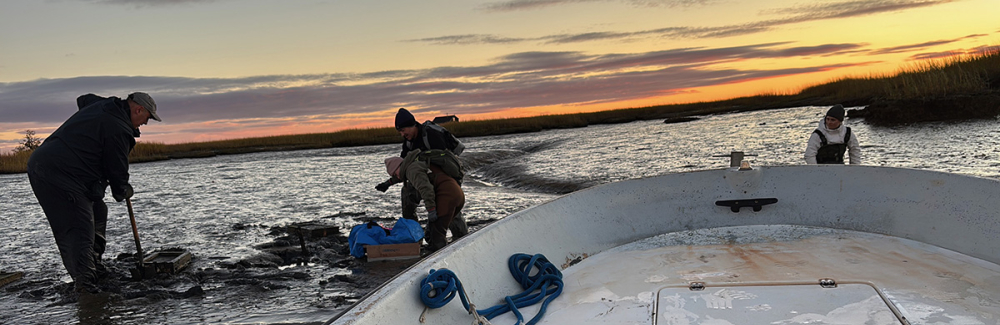
Clams have become awfully hard to find in the shellfish beds around Plum Island Sound in Massachusetts, home of the famous “Ipswich clam” and clam strips.
Shellfishing is a vital part of the economy there, with the soft-shell or steamer clam, Mya arenaria, historically the largest component of that fishery. But in recent years, the fishery has declined substantially in the Sound and all along the Gulf of Maine coast. Many point the finger at the invasive European green crab (Carcinus maenas), an omnivorous predator whose numbers, normally kept somewhat in check by cold New England winters, have increased in recent warm years.
In October 2024, scientists from the Marine Biological Laboratory (MBL), along with their colleagues in the Plum Island Ecosystems Long Term Ecological Research (PIE LTER) project, began meeting with the local shellfishing community to hear directly about the challenges it faces. In these meetings, clammers reported on the scarcity of clams to be found in previously productive shellfish beds.
But the cause of the clam decline was in question. Was it due to predation, or might there just be too few clams left to reproduce in sufficient numbers to keep the population stable?
Clams begin life as larvae, floating in the water column. They then metamorphose until ready to settle as “spat” or baby clams on a muddy bottom. Those larvae that survive through the settlement phase are considered juvenile “recruits” that replenish the clam population. At this phase, they are highly vulnerable to predation because they cannot dig deeply enough into the mud to escape.
Homes for clams to settle in
In March 2025, PIE LTER invited Brian Beal of Downeast Institute and University of Maine at Machias to a community meeting to discuss his research using “Beal” clam recruitment boxes. These small boxes, screened on top and with landscaping cloth on the bottom, are designed to allow clam larvae to settle inside and be largely protected from predation. Excitement for the boxes grew as Brian presented years of data from Maine showing clams do settle and grow inside them, in numbers useful for research but also potentially for commercial production.
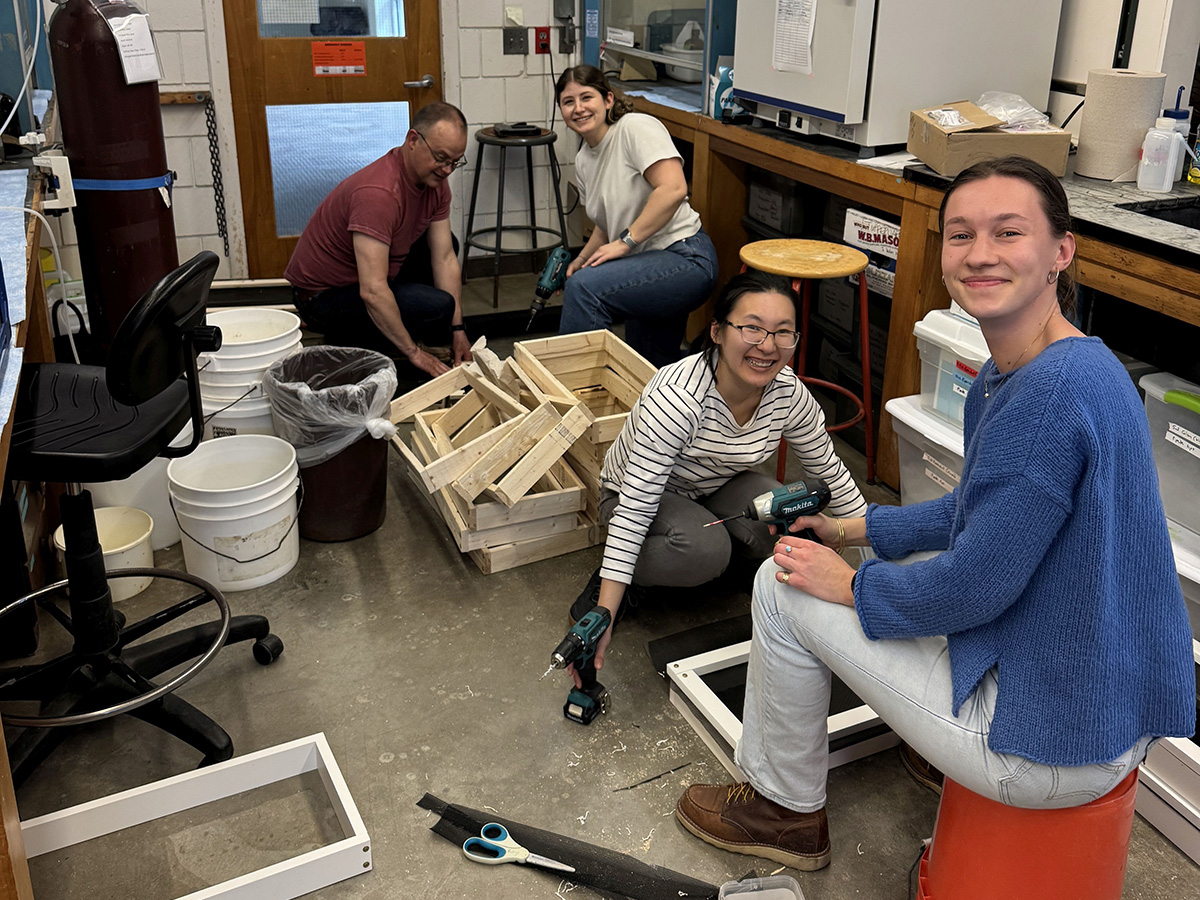
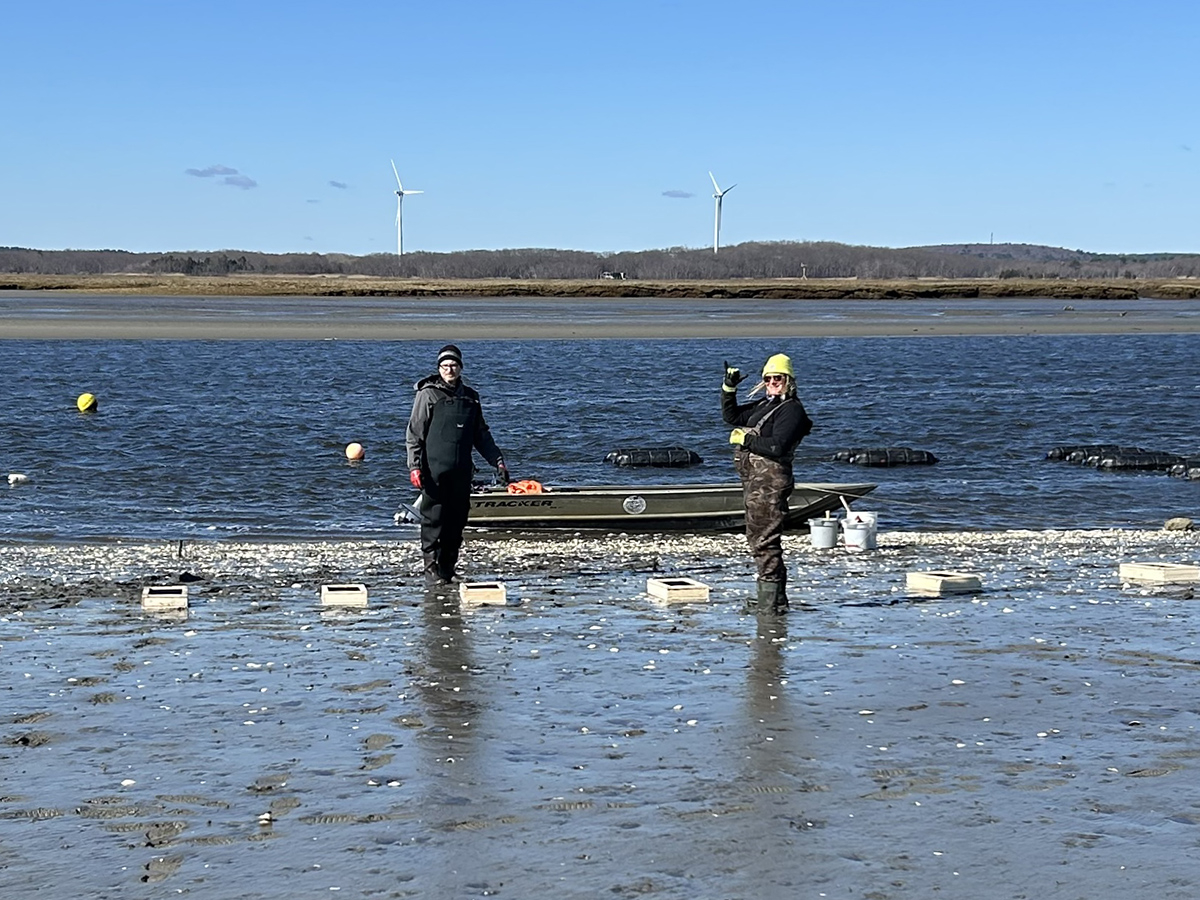
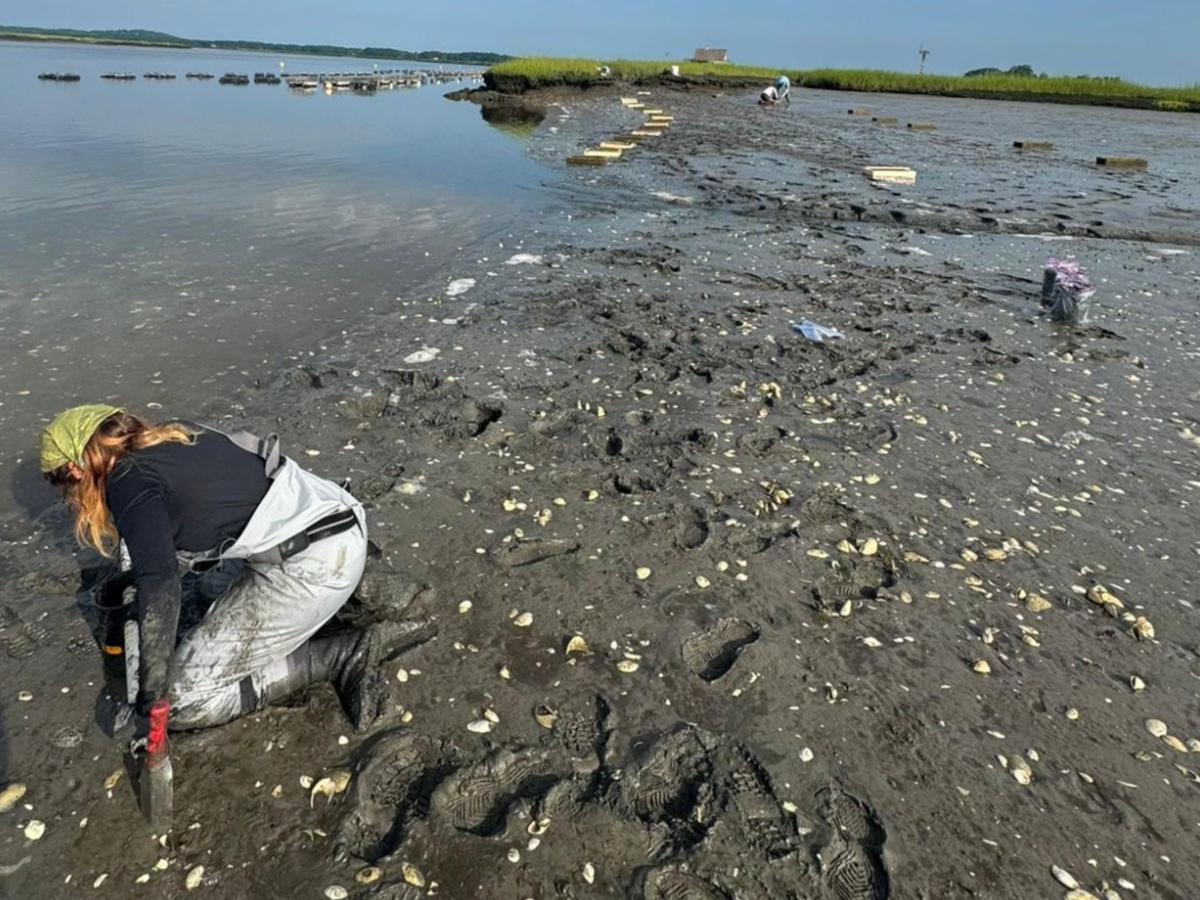
The PIE LTER team quickly made plans for a pilot study to address the question of recruitment vs. predation in the Plum Island area. Our MBL lab became an assembly line for box production, as we scrambled to build boxes in time for deployment before the expected early-season settlement of clam larvae. On a cold morning in mid-April, the team got good and muddy as it deployed 14 Beal boxes on tidal flats at the Great Marsh Shellfish Company in Rowley, Mass.
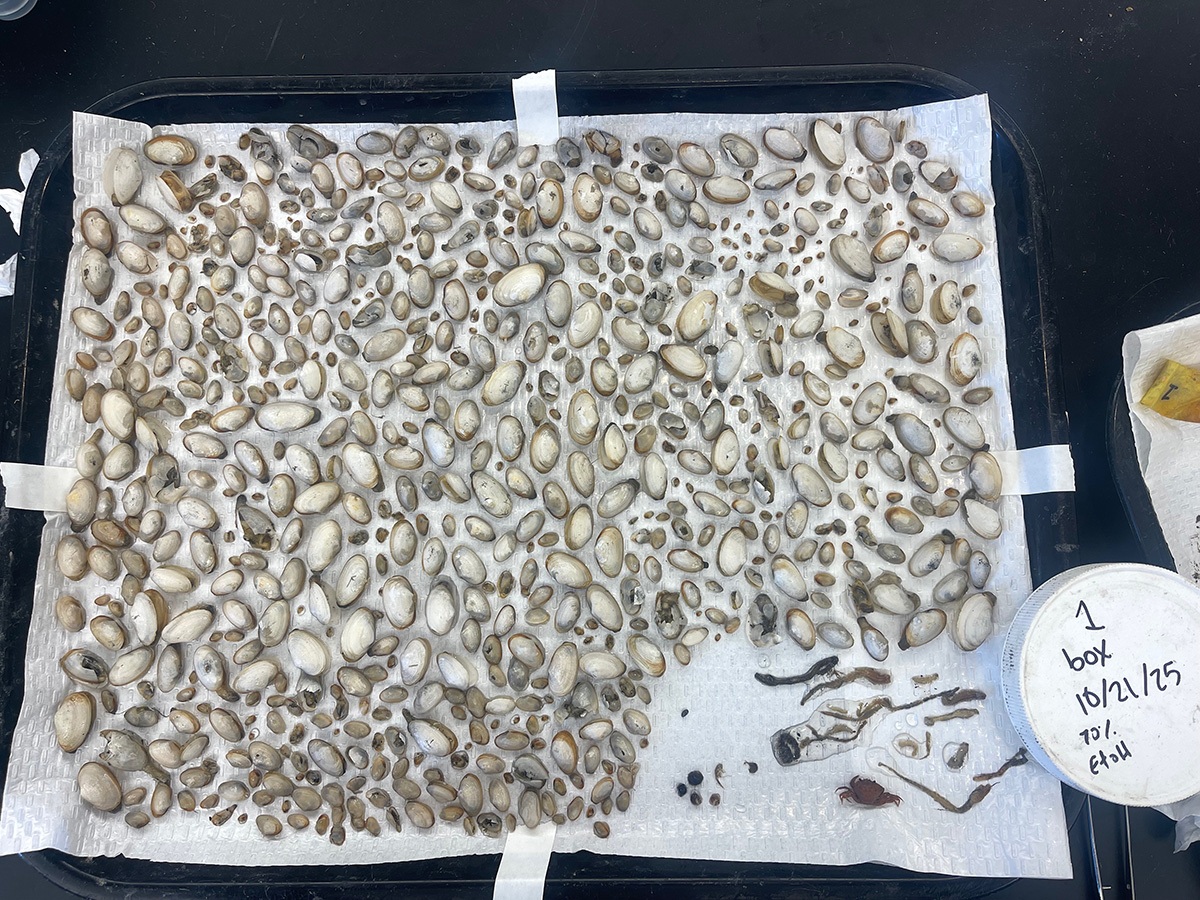
In July (warmer but just as muddy) a PIE undergraduate researcher harvested seven of the boxes and replaced them with seven new, empty boxes. This mid-season harvest and redeployment, combined with the full-season deployment, would provide insight into the seasonal timing of clam recruitment. In October, PIE scientists harvested all the now-very-muddy boxes.
In March of this year, PIE LTER held another meeting and reported its findings back to the shellfish community. For all deployment time intervals, they found many more clams inside boxes than in sediment cores taken from unprotected areas outside boxes, strongly suggesting that predation rather than a lack of recruitment is the primary cause of clam loss. Similar results were found in additional boxes deployed by the shellfish farm and the shellfish constable in Gloucester, Mass., who reported their boxes were “Full of clams!” at the end of the season. In the rare case that a crab got into a box, few or no live clams were found. A range of clam sizes within boxes for all deployment intervals suggested that recruitment occurs throughout the season.
These findings are in keeping with many years of data from Maine. But demonstrating that the boxes “work” in the Plum Island area is important and offers a pathway and optimism for rebuilding the local fishery. This summer, the team will deploy Beal boxes at more sites throughout the estuary to evaluate where recruitment is strongest. They will also conduct experiments to assess predation intensity.
Further work is planned to scale up beyond the size of these experimental boxes, and to determine best practices for overwintering and then seeding shellfish beds to successfully grow clams to harvestable size.