Global Scientists, Woods Hole Bound: 23 Named MBL Whitman Fellows

Twenty-three scientists from around the world will converge at the Marine Biological Laboratory (MBL) as the 2026 cohort of Whitman Fellows. Selected for their outstanding work, these investigators range from early-career to veteran scientists. Each will carry out independent projects while tapping into the MBL’s one-of-a-kind research environment and culture of collaboration.
Whitman Fellows are supported for up to ten weeks to pursue independent research across a range of interconnected disciplines. Their work spans evolutionary, genetic, and genomic approaches to study regeneration, developmental biology, and neuroscience, incorporating imaging and computational methods to understand cellular function. Fellows use a diverse group of emerging research organisms, explore microbial communities, and study coastal ecosystems.
At the MBL, Whitman Fellows join a uniquely collaborative scientific environment, with access to cutting-edge instrumentation, advanced imaging technologies, genome sequencing, and a rich diversity of marine and freshwater organisms. Surrounded by a global community from students to principal investigators, the Fellows engage in an ongoing exchange of ideas where creativity is fostered and where discovery is both individual and shared.
The work begins with asking vital biological questions that can be answered using the right organisms. Below is a glimpse of some of the species that make MBL research possible, followed by the 2026 Whitman Center Fellows.

Stentor. Image credit: Aidan Fenix
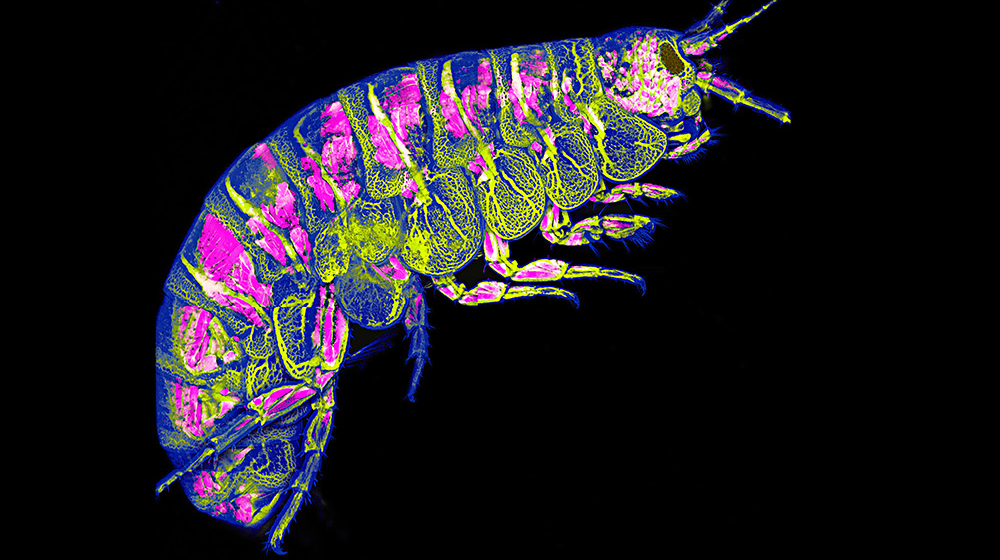
Parhyale hawaiensis. Image credit: Longhua Guo (Stowers Institute, USA)

Northern star coral (Astrangia poculata). Image credit Loretta Roberson
Whitman Early Career Fellows
Chelsea Olivia Bennice, Florida Atlantic University
Determining reliable health and stress biomarkers for Octopus bimaculoides in a laboratory setting
Daniel Benjamin Cortes, Virginia Polytechnic Institute and State University
Phylogenetic Survey of the Stentors of Cape Cod
Guilherme Gainett Cardoso M C Florez, Boston Children's Hospital, Harvard Medical School
Genetic networks patterning the multiple eyes of the Atlantic horseshoe crab
Takato Honda, Massachusetts Institute of Technology
Investigations of Evolutionary Principles of State Transitions
George Jarvis, University of Chicago
Energetic Costs of Reproduction: Quantifying Lifetime Metabolic Loads in Rotifers
Andrew Steven Kennard, University of Massachusetts Amherst
Harnessing label-free microscopy to accelerate discovery of eukaryotic diversity and evolution
Martin Knytl, Charles University Faculty of Science
Dissecting developmental systems drift of secondary sexual differentiation using genome editing in Xenopus
Shiri Kult Perry, The University of Chicago
Lung Development and Function in Xenopus: A Model for Respiratory Disease
Bianca Jones Marlin, Columbia University
Influence of Ancestral Stress on the Inheritance of Olfactory Experience
Carlos Giovanni Silva-García, Brown University
Biology of Aging of Euprymna berryi
Mubarak Hussain Syed, University of New Mexico
Diversity In Neurogenesis Evolution : Exploring the Evolution of Indirect Neurogenesis
Aalok Varma, University of California: San Diego
Investigating the function and transduction potential of an AAV-like endogenous viral element in cephalopods
Tadasu Nozaki, University of Massachusetts Amherst
Mitotic and Meiotic Chromosome Imaging in Diverse Eukaryotes
Gayani Senevirathne, Harvard University
Comparative Evo-Devo of the Hyoid: From Early Vertebrates to Human vocalization
Whitman Fellows
Angelo Forli, Istituto Italiano di Tecnologia
Establishing in vivo neural recordings in the axolotl to study nervous system reorganization during regeneration
Margaret Frank, Cornell University
Mechanisms of Vascular Regeneration in Plants: Cellular Coordination and Cross-Kingdom Insights from Graft Healing
Matthew P Harris, Harvard University, Harvard Medical School
Investigation of bivalve genetics and genomics towards understanding the regulation of longevity
Kristina Lippmann, Leipzig University
Structural correlates of short-term facilitation at a cortical synapse
Koenraad Roger Martens, Royal Belgian Institute of Natural Sciences
Ostracods in a changing world
Jan Pruszak, Paracelsus Medical University (PMU)
Deciphering surface molecule signatures in lamprey spinal cord regeneration
Nikki Georgina Traylor-Knowles, University of Miami, Rosenstiel School
Imaging Cnidarian Chimeras Using Light Sheet Microscopy
Daniel Ward, Ward Aquafarms
Heterotrophic microalgae optimization strategies to improve shellfish hatchery yield
Jake Warner, UNC Wilmington
Developing the GRNs of cell type specification in the temperate coral Astrangia poculata