MBL Scientist Alexandra Z. Worden Honored with a Guggenheim Fellowship
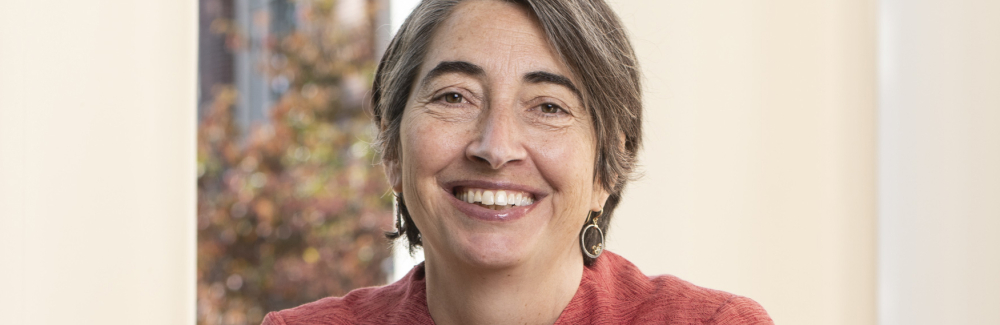
Alexandra Z. Worden, Senior Scientist in the Bay Paul Center at the Marine Biological Laboratory and a Professor in the Department of the Geophysical Sciences at the University of Chicago was awarded a Guggenheim Fellowship this week, in recognition of her groundbreaking research in ocean biogeochemistry.
Worden will use the fellowship to deepen understanding of how microbes respond to photosynthetic algae as they sink to the seafloor, a process that removes carbon dioxide from the atmosphere, with impacts on dark ocean communities that remain poorly understood.
The Guggenheim Fellowship, awarded annually, supports researchers with established track records who are ready to explore new areas of research. Worden is one of a total of 223 fellows from 55 scholarly disciplines and artistic fields representing the 2026 Fellow Class. The Fellows come from across the US and Canada and eight additional countries, including 97 academic institutions. “Our new class of Guggenheim Fellows is representative of the world’s best thinkers, innovators, and creators in art, science, and scholarship,” said Edward Hirsch, award-winning poet and President of the Guggenheim Foundation. The fellowships are designed to encourage intellectual risk-taking, and Worden’s pursuits reflect that in both spirit and a sense of urgency.
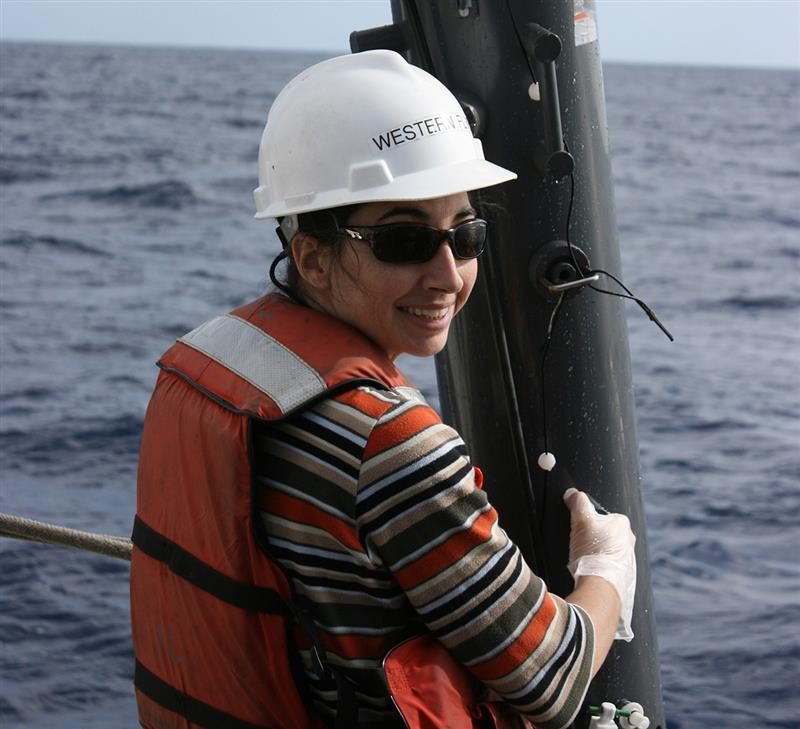
Her research is particularly timely as interest grows in the ocean’s biological carbon pump as a buffer against climate change. Worden emphasizes that it is now “really imperative to understand the molecular transformations that microbes perform in deep sea, and how they might shift if the fluxes of carbon change.”
Worden traces her commitment to foundational research back to her undergraduate years. “It seemed that many environmental engineering solutions were being applied in ecosystems that were not yet understood,” she recalled. “I realized that we need to understand the basics of each ecosystem first.
Reflecting on her prior research, Worden states, “I think my lab, from its inception, has been about developing new approaches for looking at marine organisms by innovating with existing and new tools for ‘visualizing’ cells in the ocean. We have pushed on trying to make it possible to see interactions in the wild, even between the smallest entities.”
This Guggenheim Fellowship award will extend her contributions to understanding how surface-ocean algae shape marine food chains and CO2 uptake to a whole-ecosystem perspective, extending from the surface to the deep sea.
The Marine Biological Laboratory (MBL) is dedicated to scientific discovery – exploring fundamental biology, understanding marine biodiversity and the environment, and informing the human condition through research and education. Founded in Woods Hole, Massachusetts in 1888, the MBL is a private, nonprofit institution.