Searching for Signs of Life Where It Apparently Can’t Exist | Vineyard Gazette
Mars is a sterile, hostile environment. There is no atmosphere. It is extremely cold on the dark side, and extremely hot on the sun-facing side. It has radiation and no liquid water.
But go underneath the surface and everything becomes much more familiar: including the potential for life.
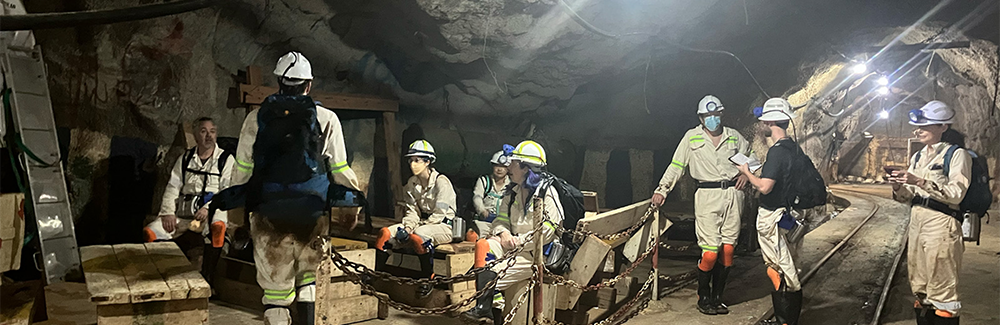
“Three kilometers in the Martian rock looks, based on our current understanding, very similar to three kilometers deep in the rock on Earth,” said Emil Ruff, adjunct scientist at the Marine Biological Laboratory (MBL) in Woods Hole. “If we understand how life survives for millions of years in briny or very salty fluids three kilometers deep in Earth’s rock, that’s the kind of ecosystem that we would expect life in on Mars.”
That search for life starts with a search for oxygen. Find oxygen and you find the conditions for life to prosper, even deep underground.
Oxygen is a biosignature,” said Mr. Ruff. “O2 and life, they belong together.”
Scientists at MBL and the Woods Hole Ocean Institution (WHOI), led by Mr. Ruff, recently won a grant from NASA to investigate the presence of “dark oxygen” — oxygen in places where it shouldn’t be and where photosynthesis doesn’t occur, like deep within the Earth’s bedrock or even on Mars.
Read more of the article here.
Source: Searching for Signs of Life Where It Apparently Can’t Exist | Vineyard Gazette