Summer is in Session
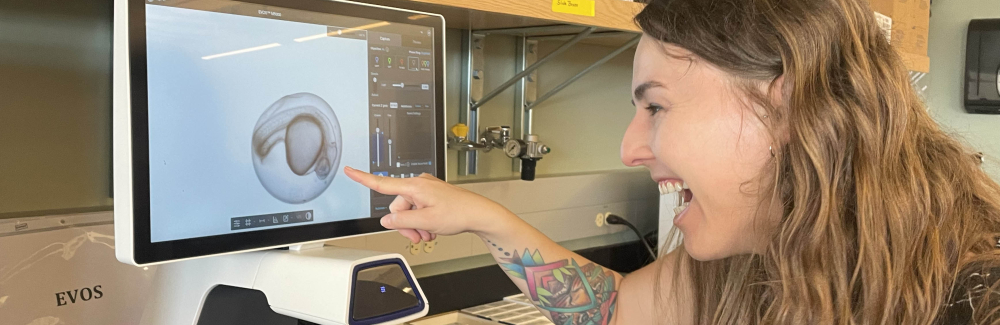
The calendar may say spring, but summer is already in session at the Marine Biological Laboratory. The labs are buzzing — students are heads-down at microscopes, pipettes in hand, and the season of discovery is officially underway.
On April 26, participants in the intensive six-week Frontiers in Reproduction (FIR) course arrived on campus, kicking off the first class of the 2026 summer season. This advanced course trains participants in state-of-the-art methods while providing a broad overview of current concepts across reproductive biology. FIR is organized into three sections: signal transduction and gene regulation, followed by topics including stem cells, gametogenesis, fertilization, and preimplantation embryo development and concluding with reproductive tract development, function, and disease. Course director Daniel Bernard, a James McGill Professor in the Department of Pharmacology and Therapeutics at McGill University, has witnessed FIR’s evolution since its early years—he trained in the lab of one of the course’s first section directors nearly three decades ago. At the MBL, Bernard leads the transcription lab, where participants learn core techniques such as promoter-reporter assays, gel shifts, and ChIP assays.
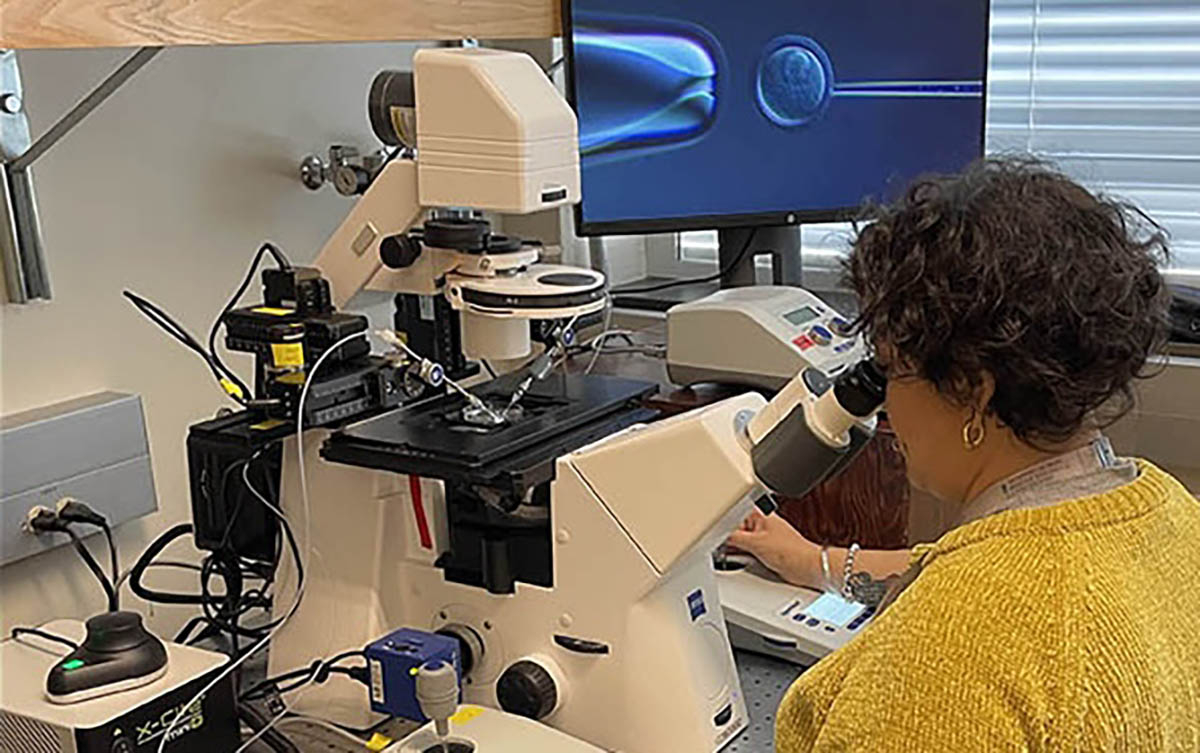
Beyond technical training, Bernard emphasizes the course’s lasting professional impact. “Students often say one of the biggest benefits of FIR is networking,” says Bernard. “Leaders in the field come to teach, and the connections formed here often last a lifetime. Years later, at conferences, scientists still identify themselves as FIRbees.” FIR has received NIH funding since its founding, with additional long-term support from the Burroughs Wellcome Fund, and more recently, the Gates Foundation.
Also on campus to kick off the summer season are participants in Analytical and Quantitative Light Microscopy (AQLM), which began April 29. Hosted at the MBL since 1981, the course focuses on the fundamentals of microscopy and how the instrumentation and techniques work to allow researchers to extract rich information from experimental samples. “Many of our students are either PhD students or postdocs, and are running microscopy projects,” co-director Alexa Mattheyses, a Professor at the University of Alabama, Birmingham says. “This course provides immediate applications to go home and change some of their protocols or change how they approach their analysis.” Microscopy core directors also attend, taking what they learn and influencing many researchers and projects at their home institutions.
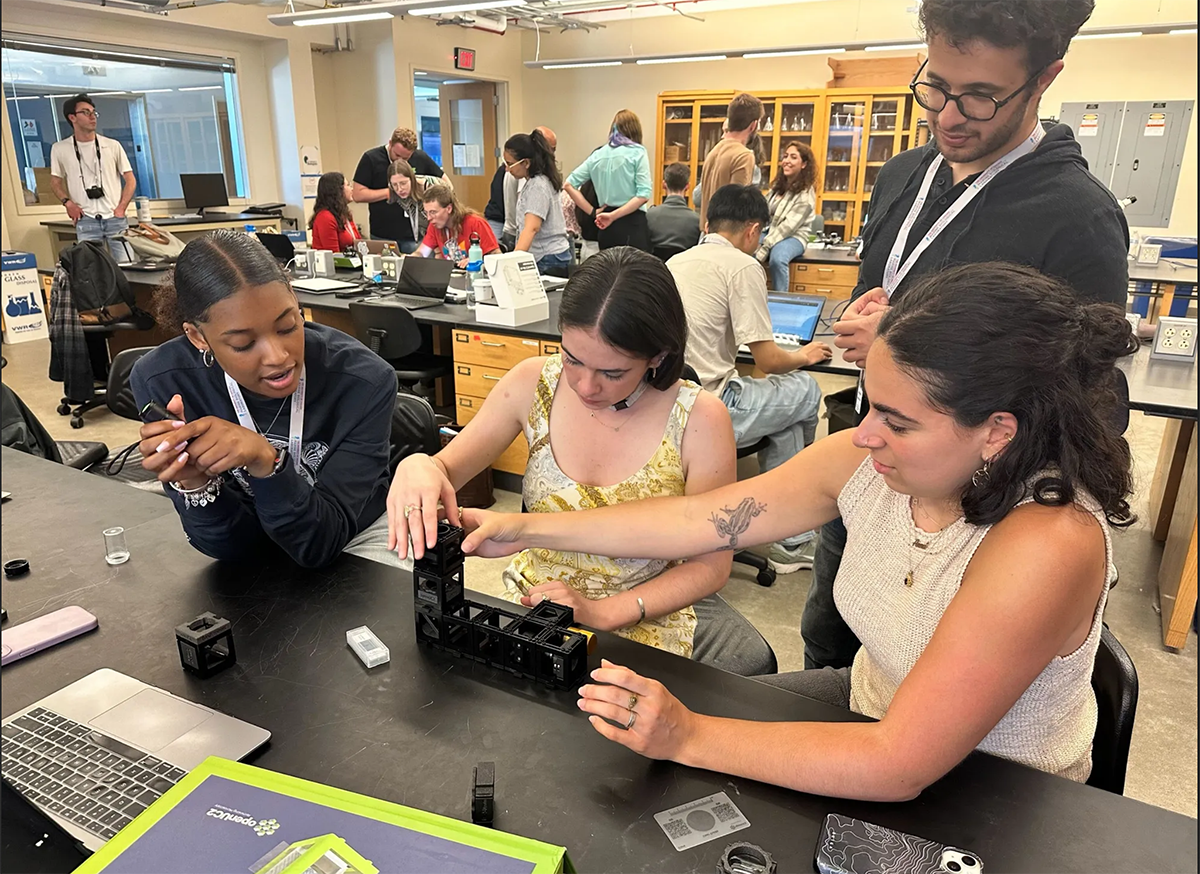
Just twenty-four hours into the course, AQLM student Marazzano Colón realized that he could use a simpler lens in his research after working with instructors. Colón says “Even something little like this will help collect four times the amount of data I'm able to collect. And we're just getting started.”
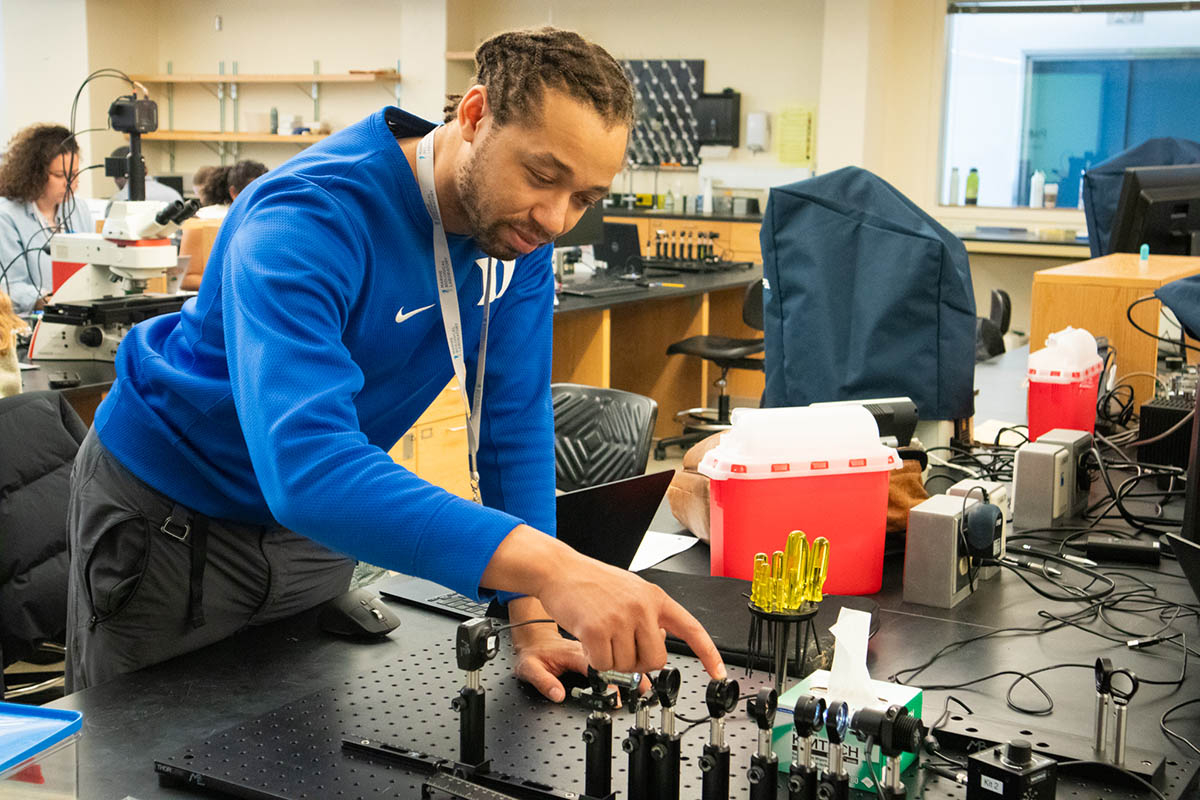
Mattheyses is particularly excited for super-resolution day. Super-resolution allows scientists to break through the diffraction barrier of conventional light microscopy, enabling visualization at the nanoscale---revealing how individual proteins are associated.
Mattheyses sees AQLM's evolution as part of its legacy. "AQLM has such a wonderful history. This year, we are working to bring the course in line with label-free microscopy — something that Shinya Inoué really pioneered as one of the founding fathers of the course. It's an honor to be part of maintaining this line of technological innovation."