Supra-permafrost Groundwater Fuels Arctic Ocean Microbes
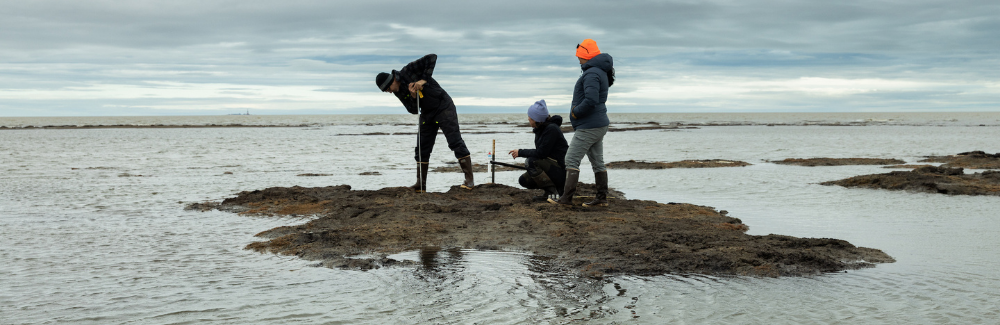
Invisible to the naked eye, microbes in the Arctic Ocean play a vital role in sustaining the region’s ecosystem. And these microorganisms survive by feeding primarily on dissolved organic matter (DOM), a carbon-rich mixture produced as plants and animals decompose.
DOM can be delivered into waters by several sources including supra-permafrost groundwater (SPGW), which flows through the active layer, or the top layer of soil that thaws during the summer each year. This layer sits above permafrost, ground that has been continuously frozen for thousands of years. As permafrost thaws, it becomes part of the active layer. This process exposes older organic matter that was previously locked in frozen ground, allowing groundwater moving through the active layer to transport that DOM into rivers and eventually the Arctic Ocean.
Despite the importance of these interactions, relatively few studies have examined the composition or biodegradability of DOM carried by SPGW. Because groundwater has been little studied in the Arctic — and because thawing permafrost is increasing groundwater inputs to the ocean — MBL senior scientist James McClelland and colleagues set out to better understand what fuels Arctic coastal ecosystems. They found that SPGW contains much higher concentrations of dissolved organic carbon (DOC) than nearby rivers and delivers a substantial amount of biodegradable organic matter to Arctic coastal waters. In other words, water flowing through the seasonally thawed active layer is a buffet for microbes that live in the nutrient-poor ocean. McClelland likens the process of organic matter released from frozen permafrost to thawing food from a freezer.
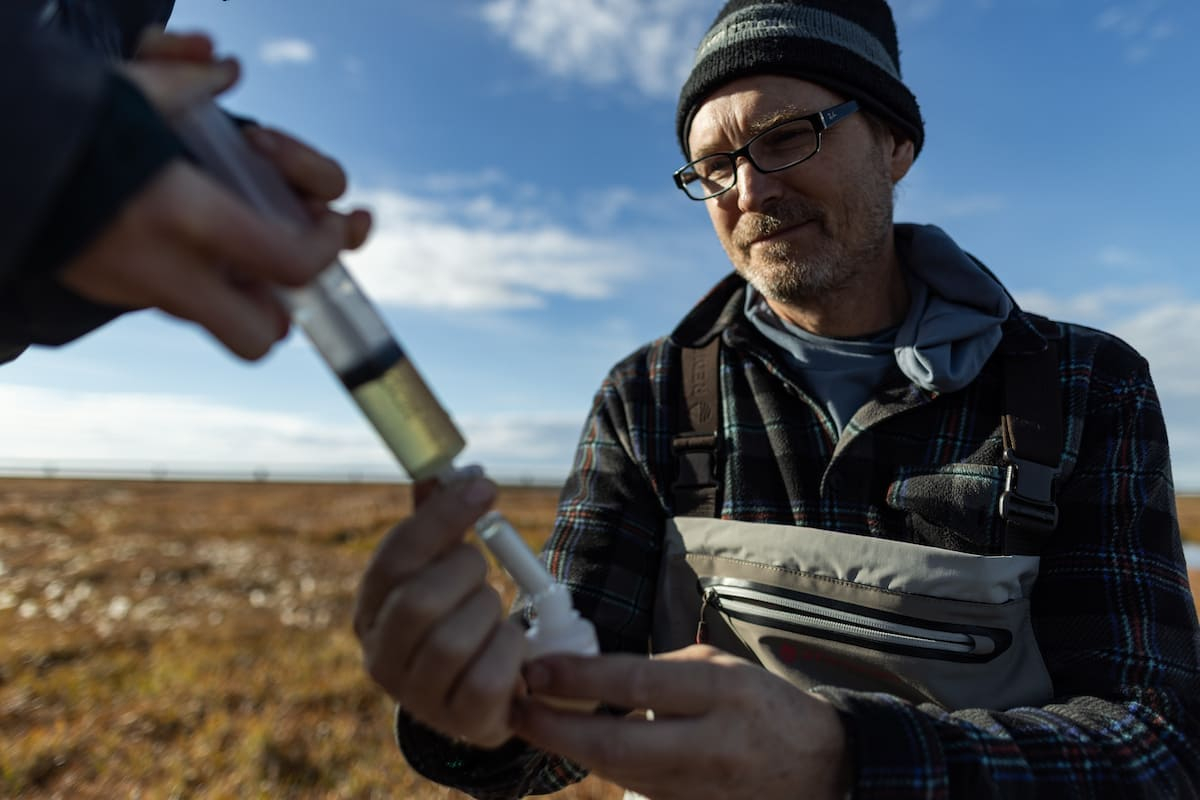
“Your steak that you take out of the freezer, it won’t last long on the counter. You take it out of the freezer, it thaws, and it becomes decomposable,” McClelland said, as an analogy to SPGW. “So that’s the key with permafrost carbon is that the stuff that’s locked away that’s not participating in the modern carbon cycle thaws and starts participating. For greenhouse gases, in a very bad way, but as food for the coastal ecosystem, maybe in a good way.”
Comparing SPGW with water from nearby rivers throughout the year, McClelland’s team found that decomposability changes with seasons. The organic matter from both sources is much more easily broken down by bacteria in the springtime when permafrost thaws, and it decreases in the summer, and even more in the fall.
McClelland’s group is continuing to work toward quantifying the proportion of organic matter coming from permafrost.
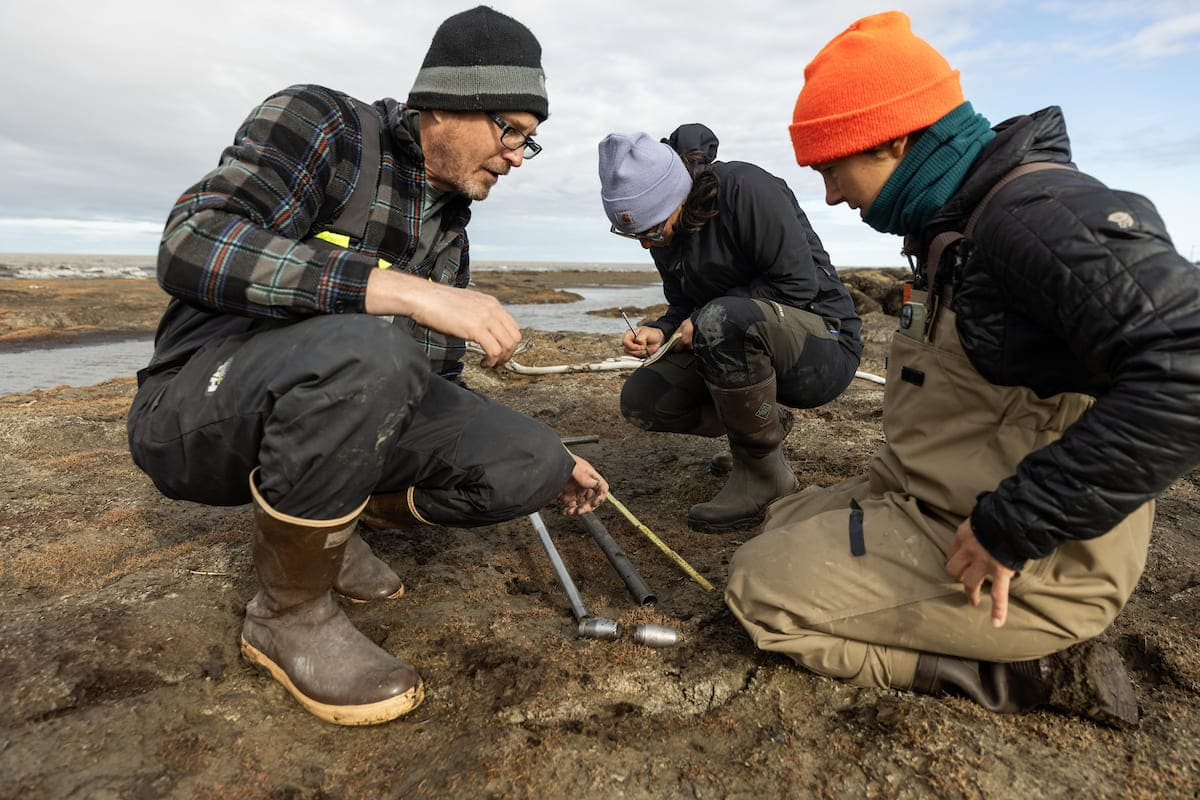
Tracking seasonality helps scientists understand that it’s also important to consider the timing of groundwater and river inputs, said McClelland, who has been researching the Arctic for 25 years. Rivers deliver far more DOC to the Arctic Ocean than SPGW does, but the river inputs are strongly focused during the spring, coming out in big volumes of water and flushing through the system. In comparison to the SPGW, think about the river water as apple juice, McClelland said.
“Groundwater is like syrup coming in,” he said. “It's very low volume and very high concentration material. It’s trickling in. It doesn't leave the system. And so, that maple syrup's slowly coming into the system and gives plenty of time for the organisms to use it.”
Although microbes directly benefit from SPGW, the influx of DOC has ripple effects throughout the ecosystem. Accounting for more than 98% of ocean biomass, marine microbes form the foundation of the food web, which ultimately supports growth of higher-level organisms such as fish and birds that local communities in the Arctic rely on. Marine microbes also fuel the global carbon cycle by taking up and releasing carbon dioxide.
“What happens in the Arctic does not stay in the Arctic,” McClelland said. Arctic ecosystems, both on land and in the water, are “ground zero” for understanding climate change that affects organisms worldwide in many ways.
“When you impose change on a system, it's not all bad or good,” McClelland said. “Some things prosper and other things don't do as well. That's just the nature of systems, whether you're right here in Cape Cod or you're up in the Arctic.”
Citation:
Bristol, E. M., Behnke, M. I., Spencer, R. G. M., McKenna, A. M., Charette, M. A., Cardenas, M. B., & McClelland, J. W. (2026). Supra-permafrost groundwater is a source of highly biodegradable dissolved organic matter to the Arctic Ocean. Environmental Science & Technology, 60(2), 1819–1830. https://doi.org/10.1021/acs.est.5c08206